Pelvic Floor Therapy in Palm Desert
Leakage, urgency, prolapse, pelvic pain, painful sex. A full hour with a Doctor of Physical Therapy who tells you exactly what happens in the room before anything happens.
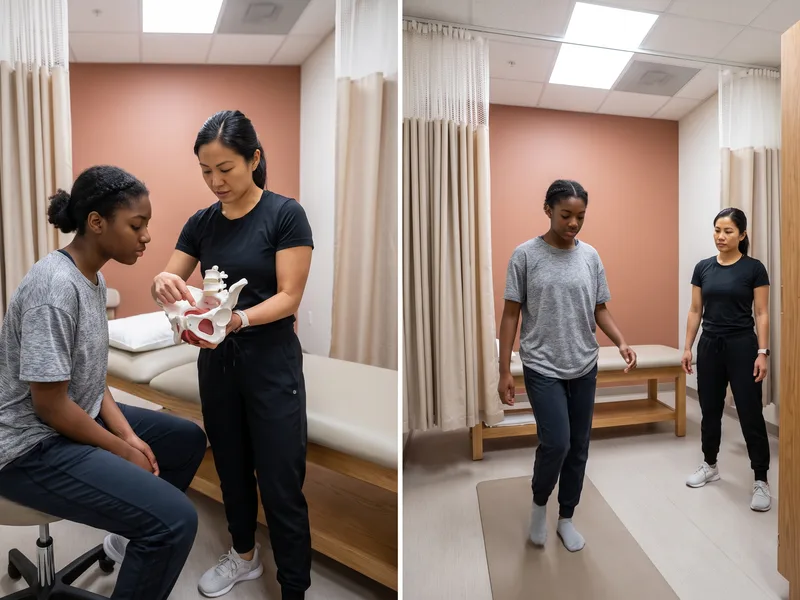
What is pelvic floor therapy in Palm Desert?
You were told this is just what happens after a baby, or after menopause, or after that surgery. That leaking when you sneeze is normal now. That the heaviness will settle on its own. That Kegels should sort it out. None of that is an assessment, and none of it tells you what your pelvic floor is actually doing. These are muscles at the base of your pelvis, and they have jobs: they hold your bladder and bowel in position, they open and close so you can empty, they help stabilize your spine and hips with every step, and they are part of sex. Like any other muscle group they can be weak, they can be too tight, and they can simply be poorly coordinated, gripping when they should let go. Pelvic floor therapy is orthopedic care applied to that group: assess what they are doing, treat what is actually wrong, retrain the timing.
This is why the Kegel advice fails so many people. A floor that is already over-tight cannot relax to let urine out, cannot lengthen for sex, and cannot absorb pressure, and squeezing it harder makes every one of those worse. A floor that is genuinely weak often needs timing before it needs more strength. Both problems can produce identical leaking. That is the whole argument for an assessment before an exercise: the same symptom has opposite answers, and nobody can guess which one is yours from the outside. Dr. Sarah Hare, PT, DPT, PCES, has advanced training in internal pelvic floor therapy and visceral mobility techniques, and California is a direct access state, so you can book the assessment yourself.
Who it's for.
Leakage, urgency, retention, prolapse, pelvic pain, painful sex, constipation and tailbone pain all run through these muscles. Inclusive means what it says here: trans and nonbinary patients, patients of any body size, and patients whose symptoms were waved off elsewhere are all routine.
A bladder that runs your day
You know where every bathroom is. You cross your legs before you sneeze, you leak on the way to the toilet, you wear a pad for a walk you used to do without thinking. Or the opposite: you sit there and nothing comes, or you never feel finished. Urgency, leakage and retention are coordination problems as often as they are strength problems, and both respond to training. None of it is a normal part of aging or of having had children.
Pain with sex, with sitting, or deep in the pelvis
Sex hurts, or sitting hurts, or there is a deep ache nobody has explained. You may have been told it is stress, or just something to live with. Pelvic pain is usually a mix of muscle that has been holding on for years, nerves that have grown sensitive, and tissue that stopped gliding after a surgery, a birth, or a fall. Painful sex and tailbone pain both belong on this list, and both respond to hands-on work plus retraining.
Pressure, heaviness, or bowels that will not cooperate
Something feels like it is sitting lower than it should, or a dragging heaviness arrives by late afternoon that was not there in the morning. Or you are straining, splinting, and spending twenty minutes on the toilet. Prolapse and constipation are both pressure problems, and pressure is trainable: how you breathe, how you brace, how you lift a child, how you sit to empty. Prolapse is not automatically a surgical problem.
What to expect at your first visit.
Not knowing is the reason most people wait years to make this call, so here it is in order. Nothing happens that you have not agreed to first, and you stay dressed for the whole first stretch of the visit.
History, then how you move
You start sitting down, clothed, talking. What your symptoms actually are, what makes them worse, your bladder and bowel habits, your births or surgeries, your sexual health if that is part of why you came. Then Dr. Hare looks at the orthopedic picture: breathing, ribs, hips, low back, how you stand, how you squat, what your abdomen does when you lift something heavy. The pelvic floor never works alone.
External work, and how far it goes
A great deal of effective treatment never goes internal. Hands-on work through the abdomen, hips, low back and around the tailbone. Breath retraining, which is the most direct lever anyone has on a tight pelvic floor and something Dr. Hare, a certified RYT 200 yoga instructor, teaches in detail. Scar mobilization. Then specific exercise for strength, for timing, or for downtraining, depending on what the assessment found.
The internal assessment, if you want it
An internal assessment is the most direct way to know whether these muscles are weak, over-tight, or firing at the wrong moment. It is done with one gloved, lubricated finger. No speculum, no stirrups. Dr. Hare explains each step before it happens, asks first, and stops the second you say stop. It stays optional at every visit, not only the first. Plenty of patients begin externally and add internal work weeks later, or never do.
You can bring someone with you. You can ask what any technique is for and get a straight answer. You can be on your period; it changes nothing clinically, and only you decide whether to reschedule. You can stop mid-session without explaining yourself, and the rest of the hour still gets used well. Saying no is not held against the plan and will not be raised again as though you owe a reason.
I would highly recommend working with Sarah for pelvic floor or other physical therapy needs.
Where to go next.

Pelvic Organ Prolapse
Heaviness, pressure, or a bulge that gets worse as the day goes on. Prolapse responds to targeted pelvic floor work.
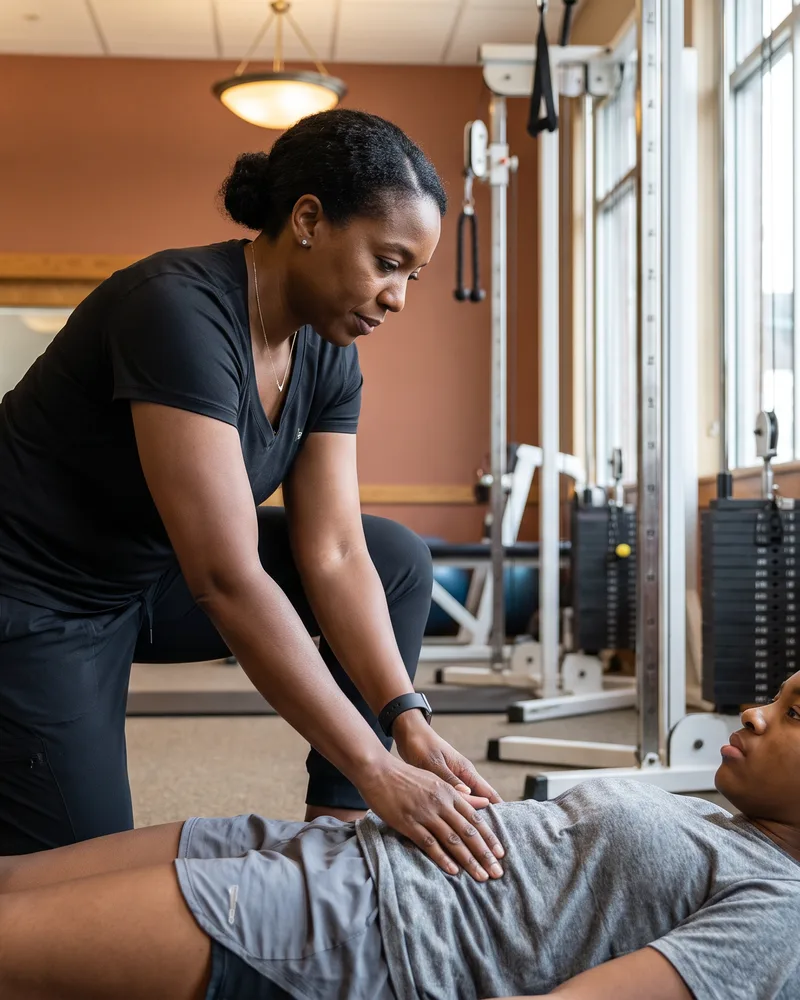
Bladder & Bowel Dysfunction
Leakage, urgency, retention, or constipation. These are muscle and coordination problems, and they are treatable.

Postpartum Recovery
Diastasis recti, leakage, scar tissue, and getting back to lifting your own child without bracing.