Bladder & Bowel Dysfunction Treatment in Palm Desert
Leaking on a sneeze. Knowing where every bathroom is. Sitting there ten minutes and still not finished. You were told to do Kegels and wait it out. That is not an assessment, and for a lot of people it is the wrong advice entirely.
What causes bladder and bowel dysfunction?
Continence is a coordination job, not a strength contest. Your pelvic floor has to hold when pressure spikes and then let go completely when you sit down to empty. Leakage, urgency, retention, and constipation are all versions of that timing breaking down, and the muscle involved can be too tight, too weak, or simply out of sequence. Which one it is decides the entire plan. It is also why Kegels help some people and make others distinctly worse.
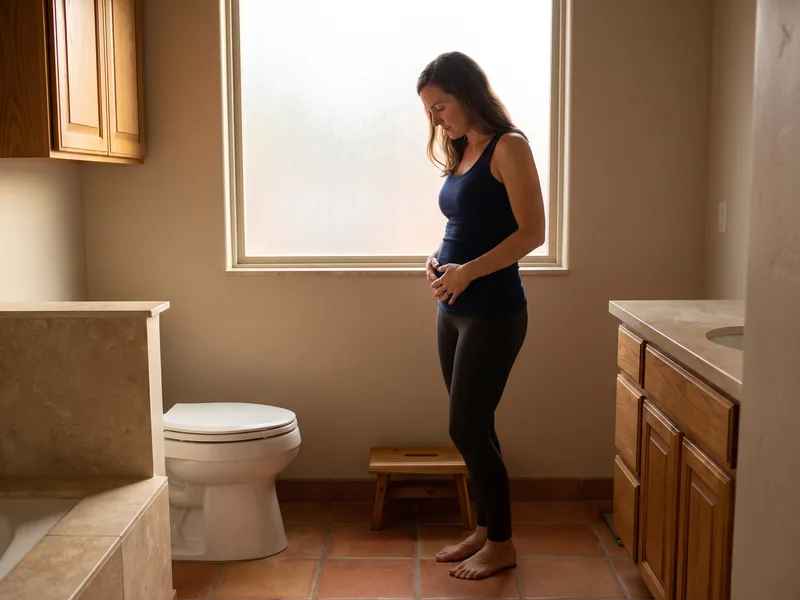
A floor that never fully relaxes is not a strong floor. Muscles held short lose range and lose the ability to produce force at the moment it is needed, and they keep the bladder irritated, so urgency arrives at volumes that should not register at all. Emptying stays incomplete because the outlet never truly opens. This is the group that gets worse with more Kegels and better with down-training, breathing, and hands-on release.
Some floors genuinely cannot generate enough closing pressure, usually after a birth, after pelvic surgery, or after years with no demand placed on them. Leakage then shows up on a cough, a laugh, a lift, or the first few running steps, because pressure rises faster than the muscle can answer it. Strengthening is the right answer here, but only when it is loaded properly, progressed over time, and paired with the ability to release.
Plenty of people have adequate strength and still leak, because the contraction arrives late or the floor bears down when it should lift. On the bowel side, the same mismatch means you strain while the outlet is still shut, so nothing moves and everything aches afterward. Nobody can talk you through this from across a desk. It takes assessment, real-time feedback, and practice until the correct pattern happens without thought.
Going just in case trains your bladder to signal earlier and earlier, until small volumes feel like emergencies. Cutting fluids in the desert concentrates urine and irritates the bladder further, and caffeine, alcohol, and artificial sweeteners do the same for many people. Hovering over seats and pushing to finish teach your body to empty against resistance. None of this is your fault, and all of it is adjustable.
Hard stool and daily pushing overload the same muscles and nerves that run your bladder, which is why bowel and bladder symptoms usually arrive together. Abdominal or pelvic surgery adds scar tissue and changes how the area moves and shares load. Hysterectomy, prostate surgery, and childbirth all reset the mechanics, and so does a chronic cough. Treating the whole picture works better than chasing whichever symptom annoys you most.
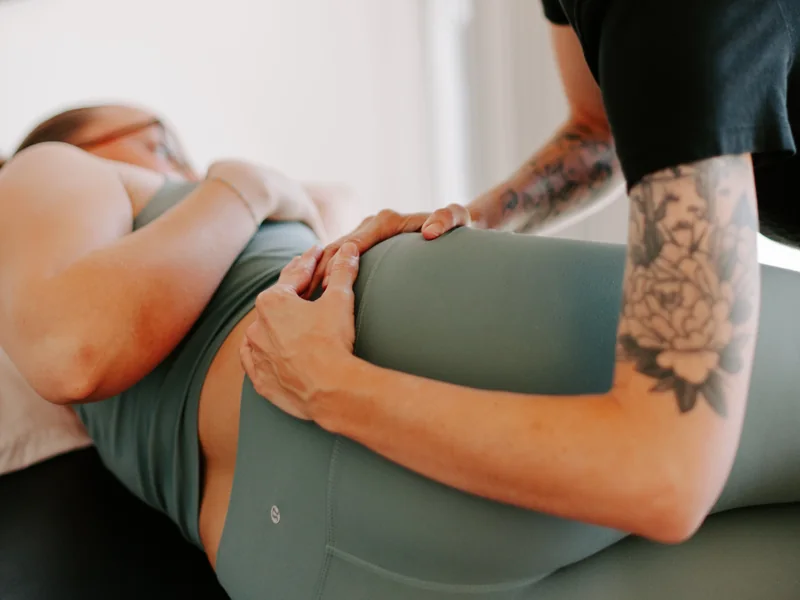
How physical therapy in Palm Desert helps.
The first job of an evaluation is to answer whether your pelvic floor needs to get stronger or needs to learn to let go, because those two plans are opposites. A full hour with Dr. Sarah Hare, PT, DPT, PCES, covers your symptom pattern across a real day, your fluid and bowel history, how your abdominal wall and diaphragm move, and, if you consent to it, how your pelvic floor contracts, relaxes, and coordinates. Then the plan gets built from what was actually found: release and down-training for a gripping floor, graded strengthening for a weak one, timing work for both, bladder retraining to stretch the intervals between trips, and toileting mechanics that let you empty without pushing. You practice it in the room until it is repeatable, not just described.
Progress gets measured out loud. Fewer pads, longer intervals, a cough that costs you nothing, a bowel movement that stops being a project. Most people notice something shift in the first few visits and know whether the plan is working within two or three weeks. Two things are worth saying before you book. An internal assessment is the clearest way to see what your pelvic floor is doing, and it is optional every single time: it is explained first, you can decline it or stop it, and plenty of effective work is external. And nothing you describe here is remarkable. Leakage, urgency, and constipation are discussed all day long, and trans and nonbinary patients, patients of any body size, and patients told this is just aging are all treated as routine.
What to expect from your recovery.
A full hour and a clear answer
Your first visit maps the actual problem: what your bladder and bowel do across a normal day, what your pelvic floor can and cannot do, and which of those is driving the symptom. You leave knowing which direction your plan runs and why.
Retraining the muscle and the reflex
Then the work. Hands-on release or graded strengthening depending on the finding, breathing and pressure management, urge suppression so you can wait without panic, scheduled voiding to rebuild capacity, and toileting mechanics that end the straining. Homework stays short and specific enough to survive an ordinary week.
Living without planning around it
The last phase moves the skill into your life: laughing, lifting, running, traveling, and sitting through a meal out without mapping your exit. You keep a short maintenance routine and know exactly what to do if symptoms edge back after an illness, a surgery, or a stressful stretch.
Dr. Sarah Hare is an attuned and super knowledgeable physical therapist.
Pain rarely travels alone.
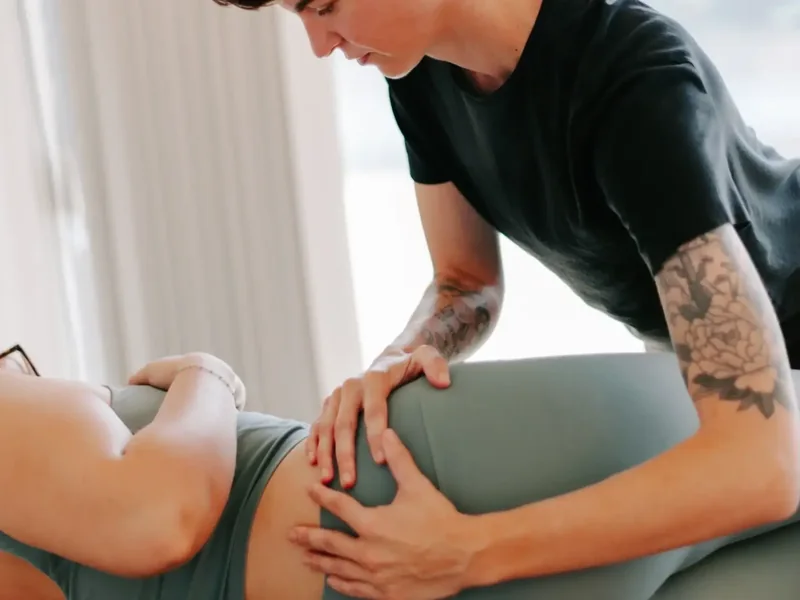
Pelvic Organ Prolapse
Heaviness, pressure, or a bulge that gets worse as the day goes on. Prolapse responds to targeted pelvic floor work.

Abdominal Pain
Scar tissue, visceral restriction, and a core that stopped firing. We work the abdomen the way we work any other joint.
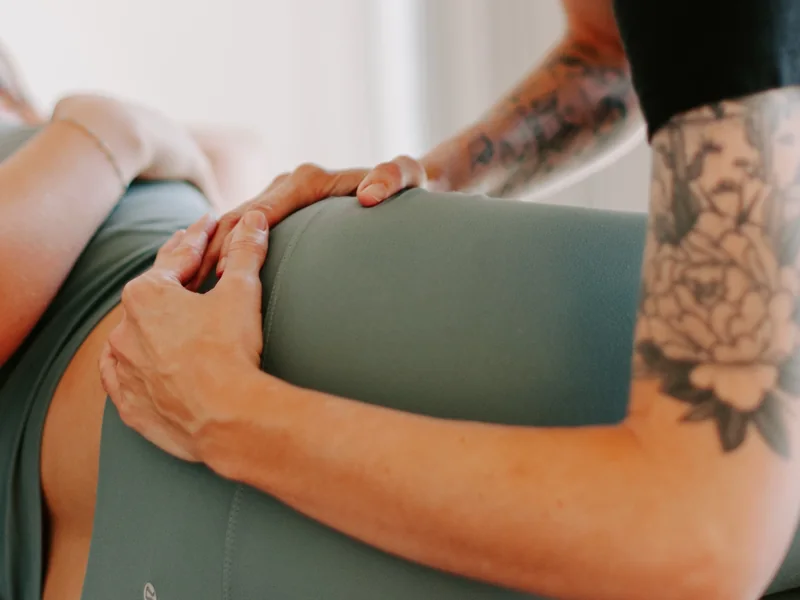
Tailbone Pain
Coccyx pain from a fall, a birth, or years of sitting. Internal and external work releases what is pulling on it.