Orthopedic Physical Therapy in Palm Desert
Joints, tendons, and the mechanics feeding them. Hands-on treatment to restore the range, then loading that makes the range hold up.
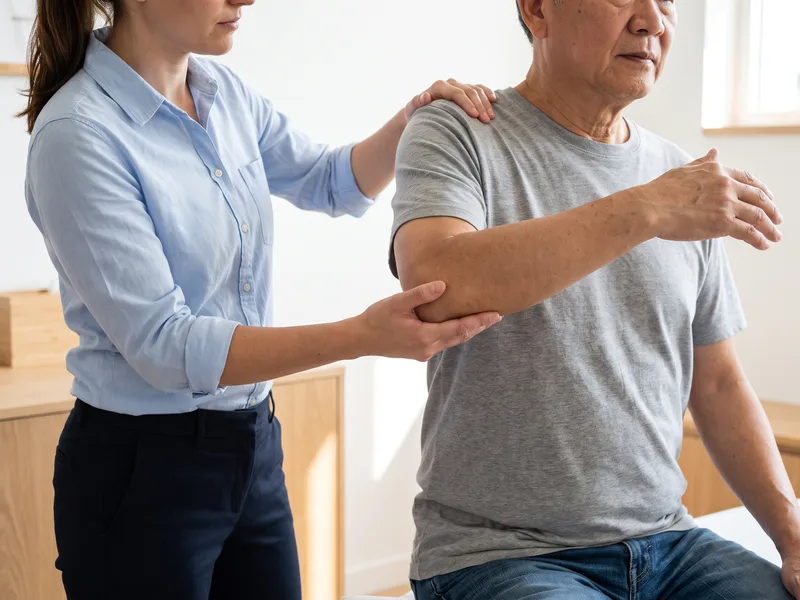
What is orthopedic physical therapy in Palm Desert?
You were told it is arthritis, or tendinitis, or just wear and tear, and handed a sheet of exercises. That names the tissue. It does not explain why that tissue is the one taking the punishment. Orthopedic physical therapy treats joints, tendons and muscles, and it treats the mechanics feeding them, which is usually where the answer sits. A knee that hurts on stairs often has a hip that stopped doing its share. Shoulder pain overhead frequently traces back to a mid back and rib cage that will not extend. A back that seizes when you lift is often a hip, or an abdominal wall, or a breathing pattern. Dr. Sarah Hare, PT, DPT, PCES, evaluates the whole chain, treats what is genuinely restricted, then loads it, because strength through the range you just got back is what keeps the range.
Dr. Hare's foundation here is unusually broad for a pelvic health practice. They began as a traveling physical therapist, working across outpatient orthopedics, inpatient trauma rehab and home health, so the caseload ran from a weekend tennis injury to a patient relearning how to get out of bed after a serious fracture. That is why the orthopedic side of this practice is not a sideline. Conditions treated include hip and knee replacements, hip impingement, ITB syndrome, patellofemoral knee pain, joint instability, ankle and shoulder injuries, postural dysfunction, back injury and sciatica. California is a direct access state, so you can start with an evaluation instead of waiting on a referral.
Who it's for.
You do not need a dramatic injury to be worth an hour of assessment. Three situations bring most people in.
A joint that has not settled down
It has been weeks. The ache is still there on the stairs, reaching behind you, or standing up after sitting through a meeting. Rest helped a little and then stopped helping. Joints that stay irritated usually have a mechanical reason: range that never came back, a muscle that lost its timing, or load landing somewhere it was not built for. The evaluation works out which one, and treatment starts that same visit rather than after another round of waiting.
Rehab after surgery
A replacement, a repair, a fusion, an arthroscopy. The surgery fixed the structure; rehab decides how much you get back. Dr. Hare has worked with post-surgical patients in outpatient clinics, in inpatient trauma rehab, and in their own homes, and your plan respects the surgeon's protocol while still progressing. Prehab counts here too. Strength built before an operation is strength you do not have to rebuild afterward, and it is the cheapest advantage in the whole process.
Trying not to be back here next year
Same hamstring, same low back, same rolled ankle, more than once, and the pattern is getting old. A recurring injury is a capacity problem or a mechanics problem, and both are testable. Dr. Hare finds the link that keeps failing, loads it properly, and leaves you with the two or three things worth keeping in your week to hold what you built. Prevention is unglamorous, and it beats starting over.
What to expect in a session.
Every visit is a full hour with Dr. Hare, hands-on and active work in the same session. Here is how the hour runs.
Evaluation and a plain-language diagnosis
You describe the history and the movements that aggravate it, then you get tested. Joint range measured rather than eyeballed, strength against resistance, balance, gait, and the specific task that hurts. Dr. Hare palpates to find which structure is actually irritated. Imaging is useful when you have it and is not required to start, because a report describes anatomy while an evaluation describes function.
Hands-on work to restore the range
When a joint or a length of tissue is the limiter, manual therapy comes first: graded joint mobilization to restore glide, soft tissue work to quiet a guarded muscle, nerve mobility work where symptoms travel down a limb. It should feel firm and specific, never something you have to endure, and Dr. Hare adjusts as the tissue responds. Hands-on work buys the range. The next part is what keeps it.
Progressive loading, then the task itself
Then you load the joint. Isometrics while a tendon is still angry, then heavier and slower, then faster and more like real life: stairs, carries, getting off the floor, a golf swing, a pickleball court, the trail you want back. Progression is decided by how you responded last time rather than by a calendar, and the same tests get repeated so progress is measured instead of assumed.
Bring clothes that let the area be seen and moved, shorts for a knee, a tank top for a shoulder. Bring imaging reports and your surgeon's protocol if you have them, though neither is needed to book. Mild soreness for a day after hands-on work or new loading is normal. Sharp pain is not, and it is worth a phone call rather than a wait until your next visit.
Dr. Sarah Hare is an incredible Physical Therapist. Her knowledge of the body, her clear instruction, listening skills and attention to detail is extremely rare IMO.
Where to go next.
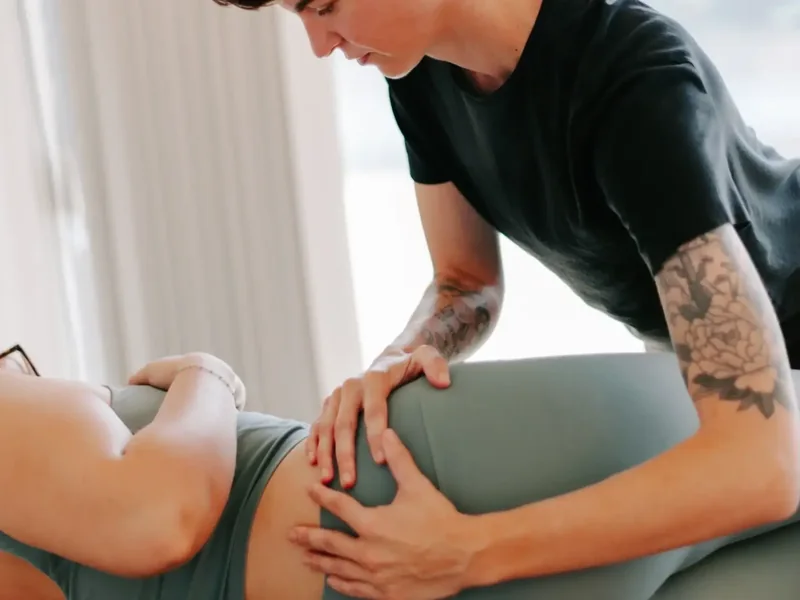
Manual Therapy
Skilled hands-on techniques that free stiff joints and quiet guarded tissue so movement stops hurting.
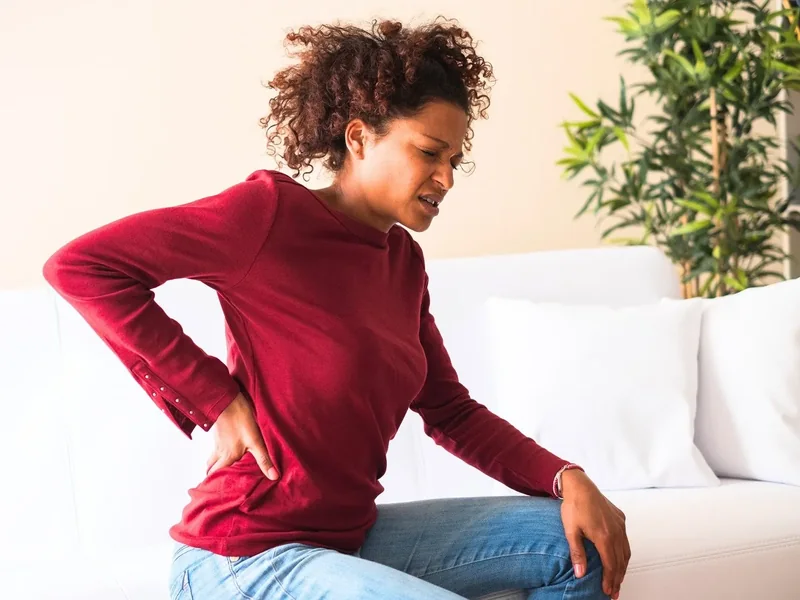
Hip & Knee Pain
Weight-bearing joints rarely fail alone. We treat the joint and the mechanics feeding it.
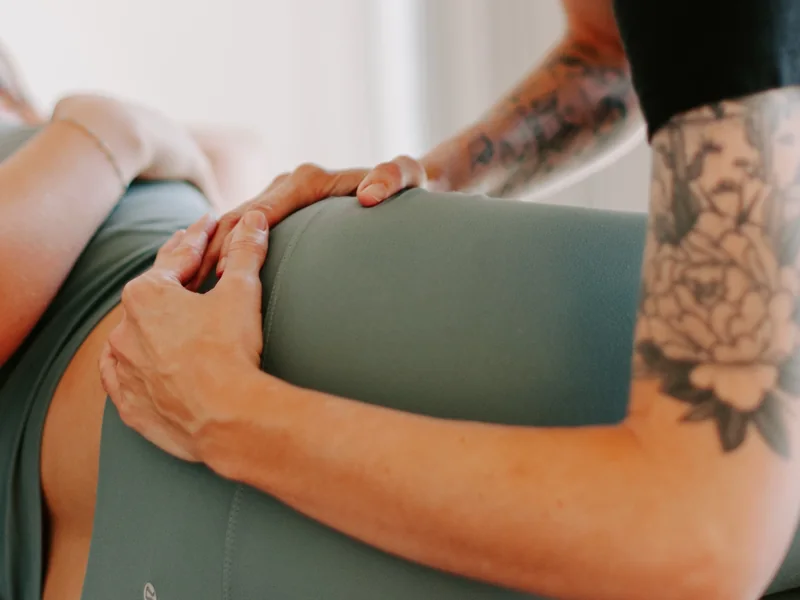
Shoulder Pain
Rotator cuff, frozen shoulder, overhead pain. Mobility first, then strength that actually holds.