Shoulder Pain Treatment in Palm Desert
Reaching overhead hurts, and sleeping on that side is out of the question. You were probably given a band and three exercises. Nobody checked whether your shoulder blade and upper back could move at all.
What causes shoulder pain?
Your shoulder is the most mobile joint you have, and it pays for that mobility by depending on control. The joint is also bigger than most people picture. It includes the shoulder blade gliding across your ribs and the thoracic spine underneath, and when either of those stops moving, the ball and socket has to make up the difference. That is usually where the pain starts.
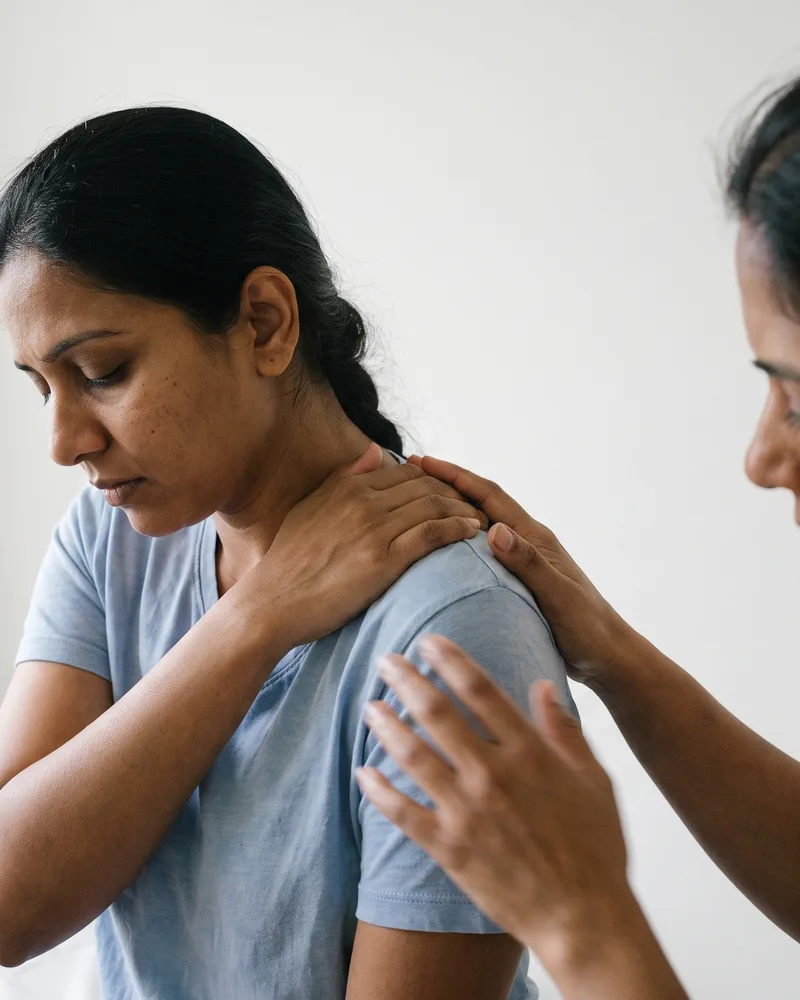
The rotator cuff is four small muscles whose job is holding the ball centered in the socket while the big muscles do the moving. Strain them with repeated overhead work, or tear one in a fall, and the shoulder loses that centering. Pain reaching overhead and pain lying on that side are the classic pair. Plenty of cuff tears do well without surgery, because a cuff that is loaded correctly can still do its job.
Frozen shoulder is a progressive loss of range, usually with a painful phase first and then a stiff phase where the capsule around the joint has genuinely tightened down. It often follows an injury, a surgery, or a stretch of time in a sling. It is not something you push through, and forcing it makes the painful phase worse. Graded joint mobilization that respects the phase you are actually in is how the arc comes back.
When the cuff fatigues, the head of the arm bone drifts upward and crowds the tendons and bursa above it. Reaching overhead becomes a sharp catch inside a narrow band of the range, and lifting a bag into an overhead bin turns into the thing you dread. The fix has two halves: get the space back by restoring how the shoulder blade rotates, then train the cuff to hold the ball where it belongs.
The acromioclavicular joint is the small joint on top of your shoulder where the collarbone meets the shoulder blade. It gets sprained in falls directly onto the shoulder and irritated by heavy pressing or reaching across your body. Pain here is easy to point to with one fingertip, which is a useful clue. Offloading the joint and then changing the mechanics that keep grinding it usually settles it without anything invasive.
Your arm cannot get fully overhead unless the shoulder blade rotates and the thoracic spine extends underneath it. If the mid-back is stiff, and after years at a desk it usually is, the shoulder blade cannot get out of the way and the joint jams near the end of its range. This is why treating only the sore spot at the front of the shoulder keeps failing, and why the upper back gets treated here too.
Hours with the shoulders rounded forward shortens the tissue across the front of the chest and lets the mid-back stiffen. Then something overhead arrives, whether that is pickleball, painting a ceiling, swimming, or a suitcase, and the cuff has to work in a position it was never prepared for. The load is not the problem. The load arriving before the range and the strength is, and that order is fixable.
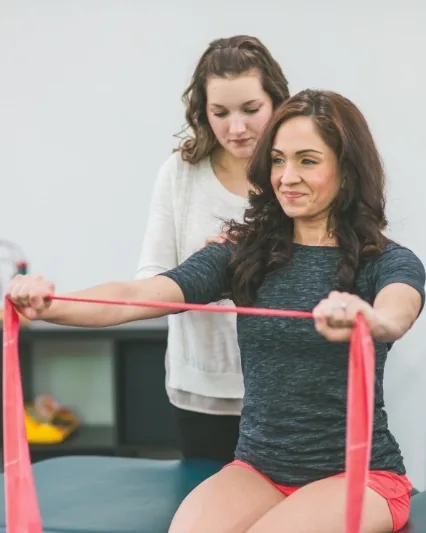
How physical therapy in Palm Desert helps.
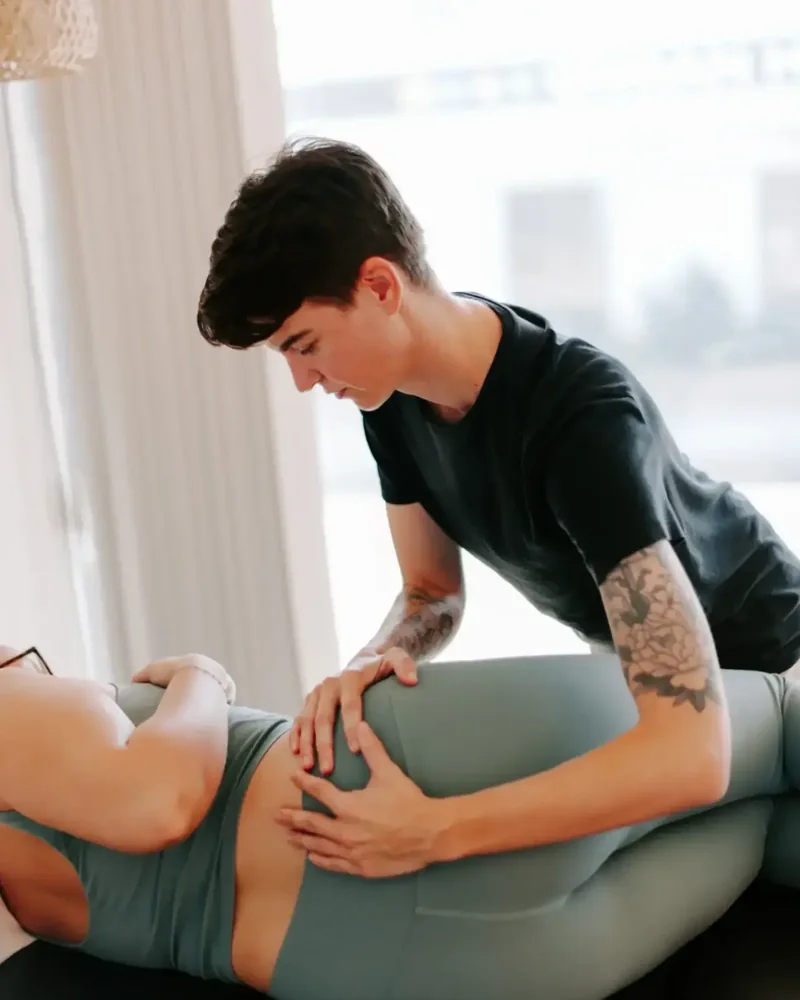
A shoulder recovers in a particular order, and skipping the first step is why so many shoulders stall out. Your evaluation is a full hour with Dr. Sarah Hare, PT, DPT, PCES, and it measures the whole system: the ball and socket, the shoulder blade on the ribs, the thoracic spine, and the neck. Mobility comes first, with hands-on joint work and soft tissue release giving the joint somewhere to move into. Strength comes second, and specifically strength that holds at the end of the range where you actually need it rather than only through the comfortable middle. California is a direct access state, so you can start without a physician referral, and your benefits are verified in writing before your first visit, self-pay rate included. Most people notice a change in the first few visits and know within two to three weeks whether the plan is working.
What to expect from your recovery.
Assessment
A full hour, hands on, with Dr. Hare. We measure range in every direction, test the cuff, and watch what your shoulder blade and upper back do while your arm travels up. You leave knowing which part of the system is limiting you and what has to change before anything gets loaded.
Mobility first
Hands-on joint mobilization for the shoulder and the mid-back, soft tissue release across the front of the chest and around the blade, and range work you can repeat between visits. Pain usually eases as the joint gets room to move, and you hear what changed rather than guessing at it.
Strength that holds
Then the cuff and the shoulder blade muscles get loaded on purpose, at the ranges you actually use. Reaching overhead, carrying groceries, pushing a heavy door, sleeping on that side, serving a ball. Progress is measured out loud each visit, and a plan that is not moving gets changed instead of repeated.
Can’t say enough about Sarah! She truly helped me get out of pain and all in the convenience of our home. I would give 10 stars if I could!
The shoulder is rarely the whole story.
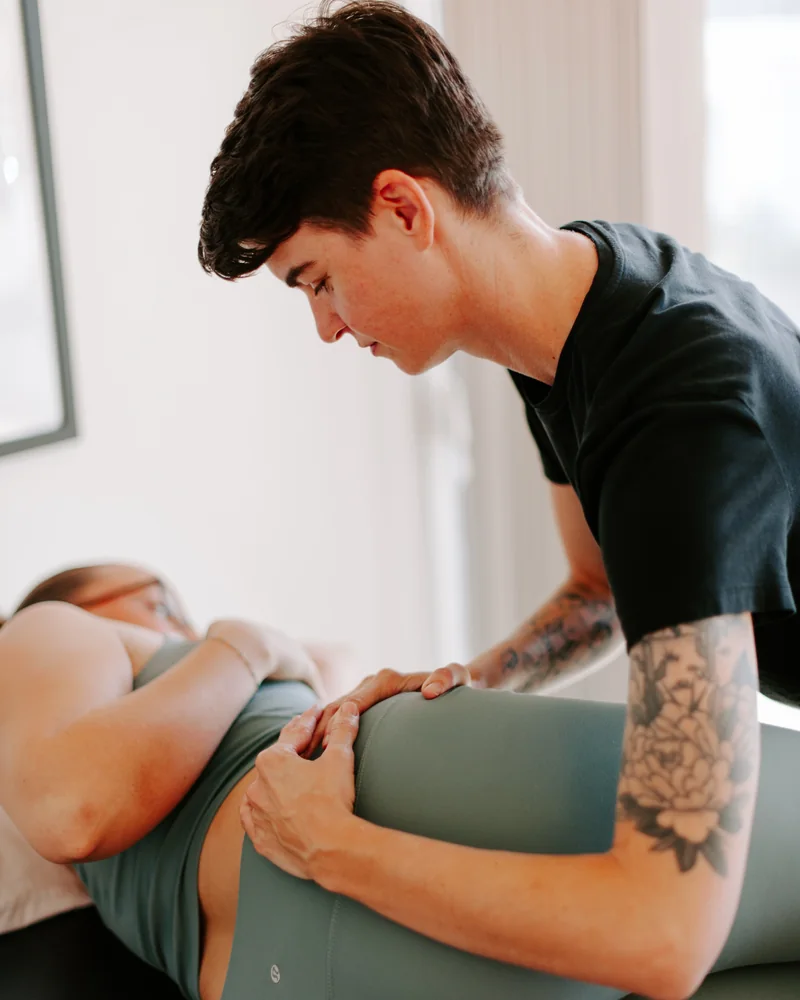
Joint Pain
Widespread aching and stiffness that moves around. We restore the mechanics before we load the strength.
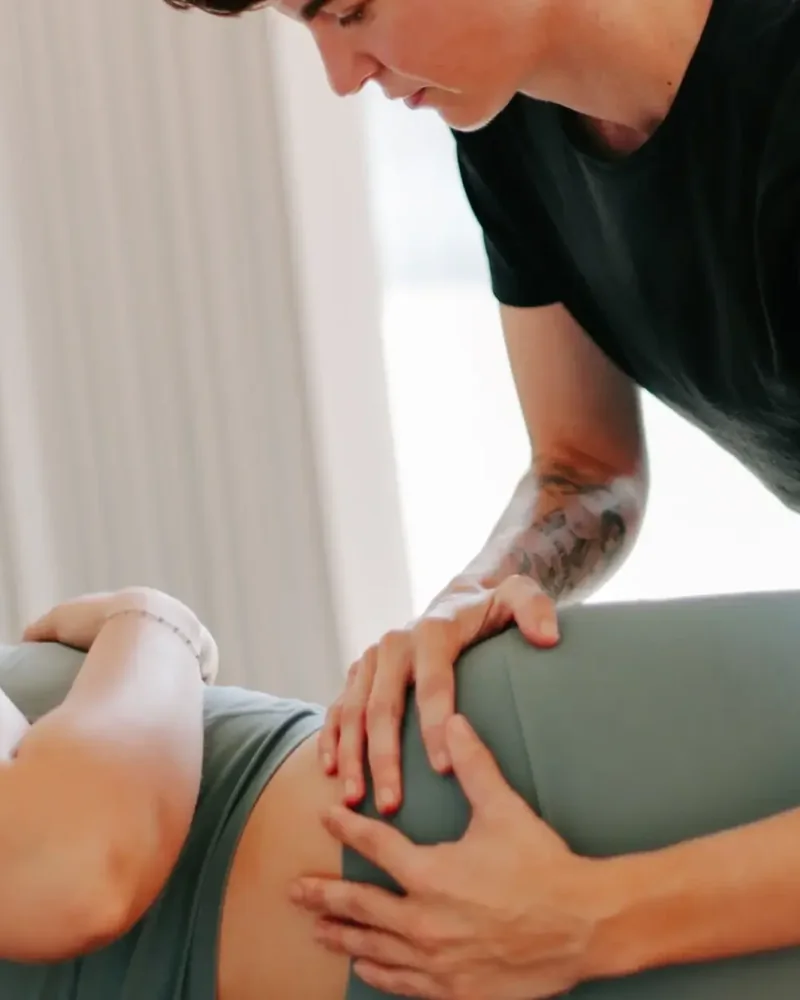
Hip & Knee Pain
Weight-bearing joints rarely fail alone. We treat the joint and the mechanics feeding it.
Pre & Post Surgical
Go into surgery stronger and come out with a plan. Prehab and post-op rehab under one roof.