Sports Rehab in Palm Desert
For the adult athlete with a season still in front of them. Runners, hikers, cyclists, tennis and pickleball players in the Coachella Valley, released back to sport on criteria rather than a calendar.
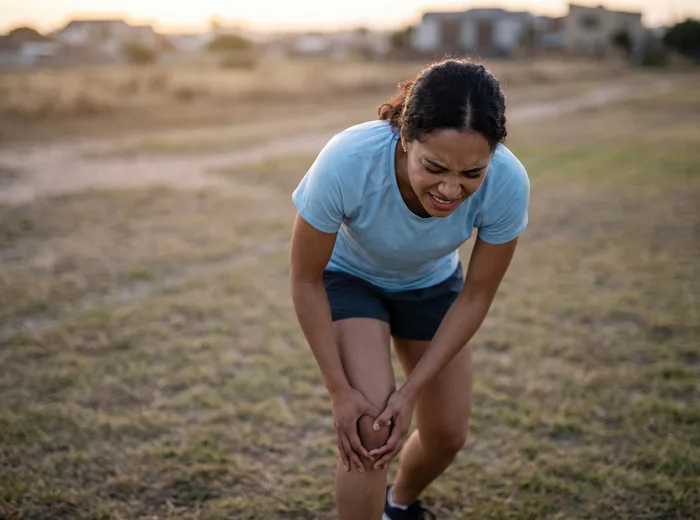
What does sports rehab in Palm Desert involve?
This is not a pitch built for professional athletes. It is built for the adult who climbs the Bump and Grind before work, hikes the canyon trails, rides with a group on the weekend, plays pickleball most mornings, or lifts regularly and has no intention of stopping. Those demands are real, and standard rehab underserves them, because walking without pain tells you nothing about whether your calf holds at the far end of a long run. Dr. Hare treats the injured tissue and the chain feeding it: how your foot accepts load, whether your hip can produce force at speed, what your trunk does once you are tired. The work is graded loading rather than rest, because tendon and muscle adapt to demand and quietly lose capacity without it.
The bigger difference is how you get released back. A calendar has no idea whether you are ready, so the decision runs on criteria instead: strength compared side to side, single-leg control that still holds when you are fatigued, hopping and landing quality, and the movement that hurt performed at the speed your sport actually asks for. You watch those measures change, which is often what settles the confidence problem on its own. Some weeks that means progressing faster than you expected. Some weeks it means holding a phase longer than you would like, and Dr. Hare will tell you which measure is holding you there. California is a direct access state, so you can start without a physician referral.
Who it's for.
Three situations bring recreational athletes here. There is also a crossover most sports clinics miss: leaking partway into a run, on box jumps, or under a heavy bar, and pressure or heaviness that only shows up when you run. Common in female athletes, routinely ignored, and treatable. Dr. Hare treats pelvic health and orthopedics in the same hour, which is why postpartum return to running gets handled properly here instead of split between two clinics.
Hurt with season left to play
Something went mid-run, on a downhill, or reaching wide for a ball, and there is still a stretch of tennis and hiking weather ahead. Nothing gets rested into oblivion here. Dr. Hare works out what the tissue tolerates right now, keeps the rest of your training alive around the injury, and loads the injured area deliberately so it rebuilds. You leave knowing which sensations are acceptable mid-run and which ones mean stop, which is usually the information nobody gave you.
Cleared, but you do not trust it
The imaging came back clean or the surgeon released you, and the leg still feels like it belongs to someone else. That is not in your head. Being cleared means the tissue has healed, not that it can produce force at speed or absorb a landing when you are tired. Those get tested separately, and you see the results, so going back becomes a decision based on what your body did in front of you rather than on hope.
Nothing torn, but something is slipping
You are stiffer at the start of a hike than you used to be, slower to recover between pickleball mornings, or nursing the same Achilles every spring. This is the best time to be seen, because capacity is easier to build than to rebuild. Dr. Hare finds the weak link, whether that is calf endurance, hip strength or how you breathe under load, then loads it until the pattern stops flaring.
What to expect in a session.
A full hour with Dr. Hare every visit, in the Palm Desert clinic. The same clinician evaluates you, treats you, and decides with you when you go back.
The evaluation, with your sport in it
You describe what you actually do: weekly mileage, how much of it is on trail, how many pickleball mornings, what you lift, what you changed right before this started. Dr. Hare then tests it, including strength side to side, single-leg control, joint range, and hands-on assessment of the painful tissue. You finish the hour knowing which findings matter, which do not, and what the first measure of progress will be.
Loading, phase by phase
Early visits build tolerance in the injured tissue and address whatever upstream link showed up in testing. As capacity comes back, the work looks more like your sport: change of direction for court players, hills and cadence for runners, heavier and faster for gym regulars. A phase advances when you meet its entry criteria, not when a set number of weeks has gone by, and you know those criteria in advance.
Return-to-sport testing
Before you go back fully, you are tested: strength compared side to side, hop and landing control, endurance of the muscle that failed, and the specific movement that hurt at the speed your sport needs. You see the numbers. Then you get a graded plan for the first weeks back, along with the honest note that returning to sport is where reinjury risk lives, so the ramp matters as much as the clearance.
Bring the shoes you actually train in and a rough log of the last few weeks. If you leak, feel pelvic pressure, have pain with sex, or are working back to running after a baby, say so at the evaluation even if it feels unrelated to your ankle. It is relevant to how you load, it is treatable, and it is handled in the same hour. Most people notice a change in the first few visits and know whether the plan is working within two to three weeks. Your benefits are verified before that visit, and there is a self-pay rate if your plan turns out to be a poor fit.
As a person with numerous overlapping issues from emergency internal surgeries to acute nagging sports injuries, Ive been a customer at numerous PT offices around the country over the last 30 years.
Where to go next.
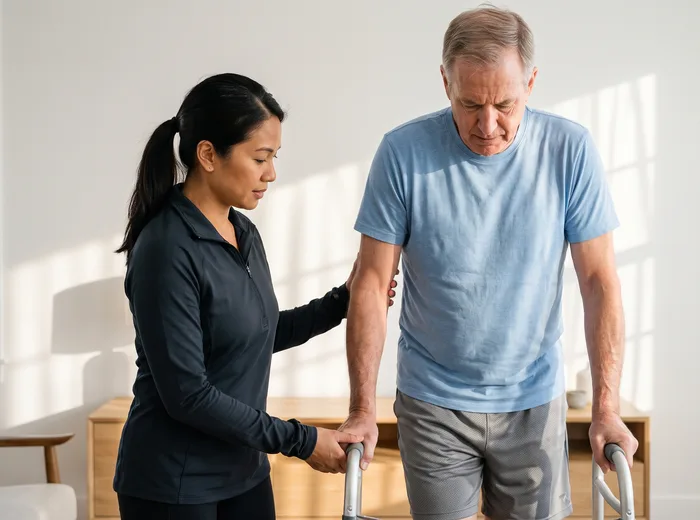
Orthopedic Therapy
Joints, tendons, and the mechanics around them. Hands-on assessment, then loading that builds real capacity.

Hip & Knee Pain
Weight-bearing joints rarely fail alone. We treat the joint and the mechanics feeding it.
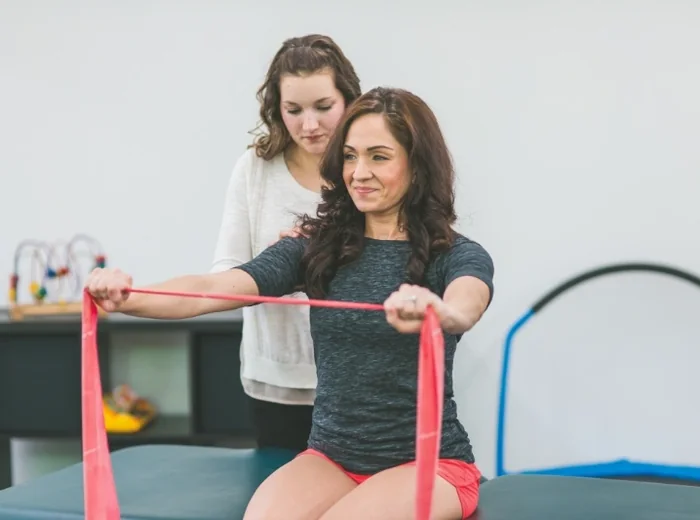
Foot & Ankle Pain
Plantar fasciitis, sprains, Achilles pain. Your foot is the base of everything above it.