Foot & Ankle Pain Treatment in Palm Desert
Every step reminds you something is off, and you have quietly changed how you walk to avoid it. Feet are the base of everything above them, which is why this is worth an actual answer.
What causes foot and ankle pain?
Your foot is the only part of you touching the ground, so everything above it gets built on whatever the foot does first. Feet rarely fail suddenly. They fail by accumulation: an old sprain that was never rehabbed, a calf that stopped lending its length, a shoe change, a new job on concrete. Finding which one tipped you over is what makes this treatable instead of something you manage forever.
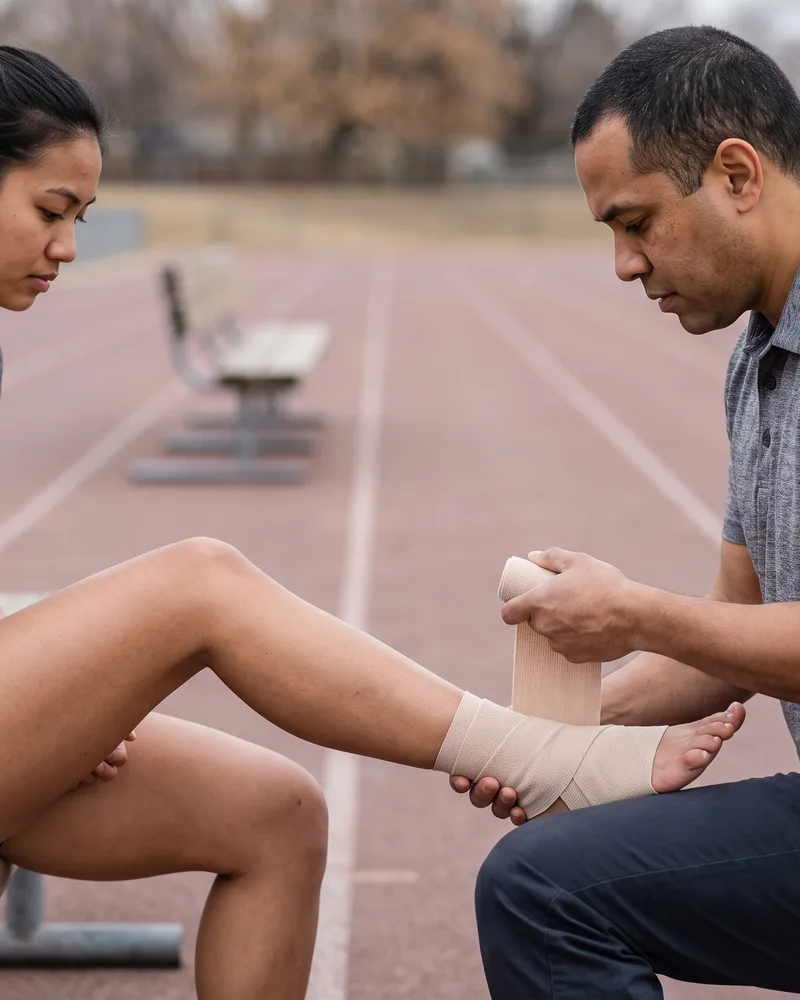
A sprain stretches or tears the ligaments holding the ankle together, and it also scrambles the ankle's sense of where it is in space. Rest restores neither of those. So the ankle keeps feeling unreliable, rolls easily, and quietly stops giving you full range on hills and in a deep squat. This is the injury that turns up years later as hip or knee pain, because the leg above it has been covering for the ankle ever since.
The plantar fascia is a thick band running along the sole from heel to toes. Overload it, or hold it under constant tension with a tight calf and an arch that has no strategy, and it becomes painful right where it anchors into the heel. The signature is the first few steps in the morning: sharp, then easing as you warm up. Calf length, arch control, and how much standing you added recently all belong in that conversation.
The Achilles takes the force of every step, hill, and push off, which makes it strong and also makes it slow to forgive a sudden increase in work. Irritation shows up as pain and thickening at the back of the heel, worst at the start of activity and again the next morning. Tendons do not respond to rest, they respond to load in the right dose. Getting that dose right is most of the treatment.
What matters is how your arch behaves while you are moving, not what it looks like standing still. An arch that collapses and never recovers sends the shin rotating inward on every step, and that is often felt at the knee rather than the foot. A rigid, high arch has the opposite problem: it absorbs almost nothing, so the heel and forefoot take the impact. Both are trainable, and both change what happens above the ankle.
Most foot pain arrives just after a change: new shoes, a job on hard floors, a training plan that jumped, a summer of sandals after a winter of support. Tissue adapts to load happily enough, but it needs the load to arrive gradually. Nothing about your foot is broken because it protested a change. It needs that change reintroduced at a rate the tissue can follow, which is a plan rather than a guess.
An ankle that was broken, casted, and never rehabbed is usually stiffer and weaker than the person walking on it realizes. Surgical scars tether the soft tissue around the joint and change how the tendons glide underneath it. None of that is a lost cause, and none of it is too late. Hands-on work to free the tissue plus specific loading restores range and strength that has been missing since long before this pain started.
How physical therapy in Palm Desert helps.
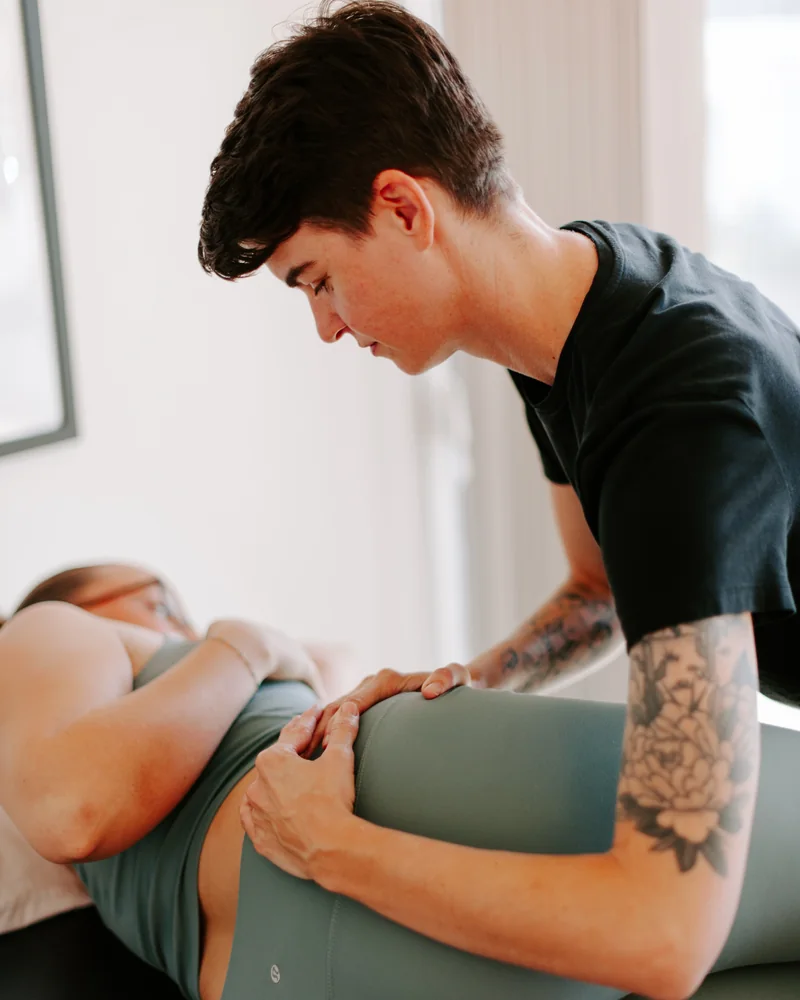
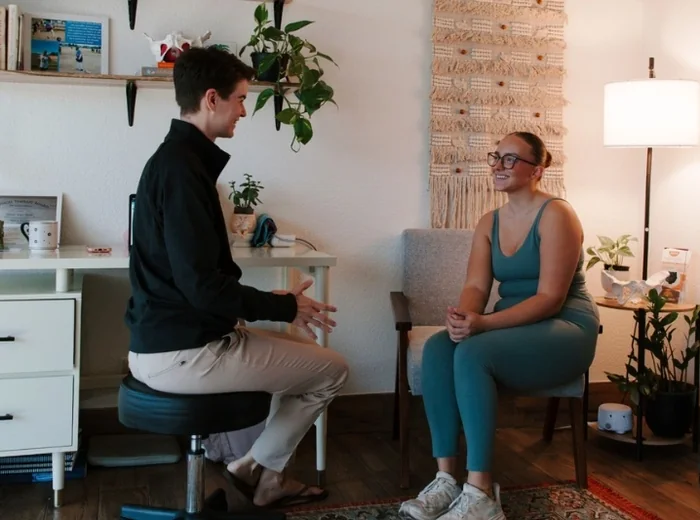
Feet are not supposed to hurt with every step, and foot pain is not something you outlast. Your evaluation is a full hour with Dr. Sarah Hare, PT, DPT, PCES, and it starts at the ground: how the foot loads and unloads, how much range the ankle genuinely has, what the calf will give you, and then what the knee and hip above are doing as a result. Hands-on work releases the restricted tissue and restores the joint motion the foot has lost. Then it gets loaded, with calf work, arch control, and balance, because a foot without strength simply goes back to hurting. California is a direct access state, so no referral is needed to start, and your benefits are verified in writing before you arrive, self-pay rate included.
What to expect from your recovery.
Evaluation
A full hour, hands on, with Dr. Hare. We watch you walk and load the foot, measure ankle range, test the calf and the small muscles inside the foot, then look at what the knee and hip are doing above it. You leave knowing why your foot hurts and what the first couple of weeks will ask of you.
Hands-on and mobility
Manual therapy for the restricted joints of the foot and ankle, soft tissue work through the calf and the sole, and mobility work you can repeat between visits. This is the phase where the tissue stops being irritated all day long, which is what makes real loading possible at all.
Strength and balance
Then the foot gets strong. Calf loading, arch and toe control, and single-leg balance progressed as you earn it, so the ankle knows where it is on uneven ground and gravel. Progress gets measured out loud, and the plan changes when the measurements say it should.
Sarah listens well and inspires confidence. She takes great care in preparing the PT exercises with precise instructions. She clearly cares about her patient's health.
The foot is rarely working alone.
Hip & Knee Pain
Weight-bearing joints rarely fail alone. We treat the joint and the mechanics feeding it.
Joint Pain
Widespread aching and stiffness that moves around. We restore the mechanics before we load the strength.
Shoulder Pain
Rotator cuff, frozen shoulder, overhead pain. Mobility first, then strength that actually holds.