Joint Pain Treatment in Palm Desert
Stiff, aching joints, and the ache does not always stay in one place. You were probably told it is age. Age is not a mechanism, and a mechanism is what a plan needs.
What causes joint pain?
Aching that moves around is hard to describe and easy to have dismissed. One week it is a knee, the next a wrist and both shoulders, and nothing you did explains the pattern. A joint hurts when it has lost motion, lost support, or is absorbing work that a stiffer joint nearby refuses to do. Physical therapy does not treat a disease of the joint. It treats those three things, and that is often what changes how you feel.
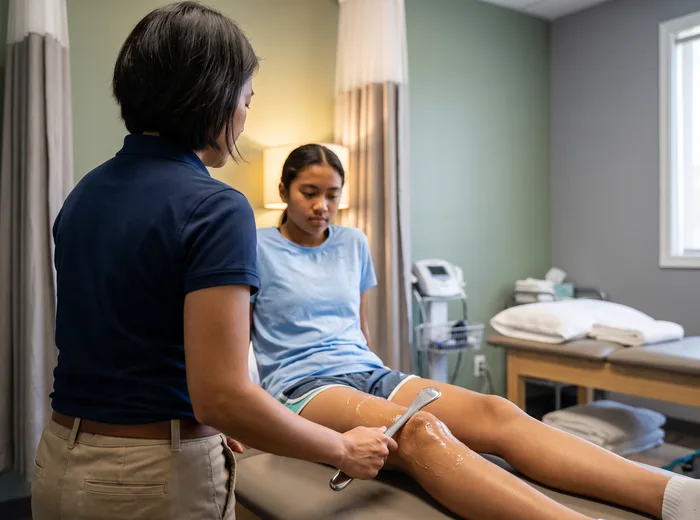
Joints are built to glide, and they stay comfortable through the range they actually use. Keep one still long enough, whether because of pain, a brace, or simple habit, and the capsule around it tightens while the range quietly shrinks. Then ordinary movement runs into a new end range and it hurts. This is the most fixable cause on the list, and it is why motion comes before strength in every plan here.
Joints and tendons adapt to what you ask of them, but they adapt more slowly than enthusiasm moves. A weekend of yard work, a new class, a move, a stretch of overtime, and the tissue ends up irritated by volume rather than damaged by it. That distinction matters. Irritated tissue calms down, and it calms faster when you keep moving at a dose it can handle instead of stopping altogether.
An old sprain, tear, or fracture can heal and still leave the joint less supported than it was. You favor it without noticing. The stabilizers around it fire late. Years later that joint starts aching, and the original injury sits so far back that nobody connects the two. Rehab that finishes the job the injury interrupted often settles a joint that has been complained about for a decade.
Cartilage thins and joint surfaces change with time and use, and those changes appear on scans of a great many people with no pain at all. An image is information, not a verdict. Physical therapy does not treat arthritis or an autoimmune condition itself, and aching with swelling, fever, unusual fatigue, or morning stiffness lasting hours deserves a physician's opinion as well. What therapy treats is how the joint moves and what supports it.
Muscle is a joint's suspension. When it is weak or slow to switch on, force lands on the joint surfaces and ligaments instead of being absorbed on the way in. The joint stiffens to protect itself, so you do less, so the muscle weakens further. That loop is what makes joint pain feel like a decline, and interrupting it is straightforward once the joint has enough range to be loaded safely.
When one joint stops moving well, the joints on either side of it take over, and they are usually the ones that end up hurting. A stiff ankle hands its work to the knee. A stiff mid-back hands it to the shoulder and the neck. This is why the painful joint is often not the guilty one, and why the exam covers the level above and below wherever you point.
How physical therapy in Palm Desert helps.
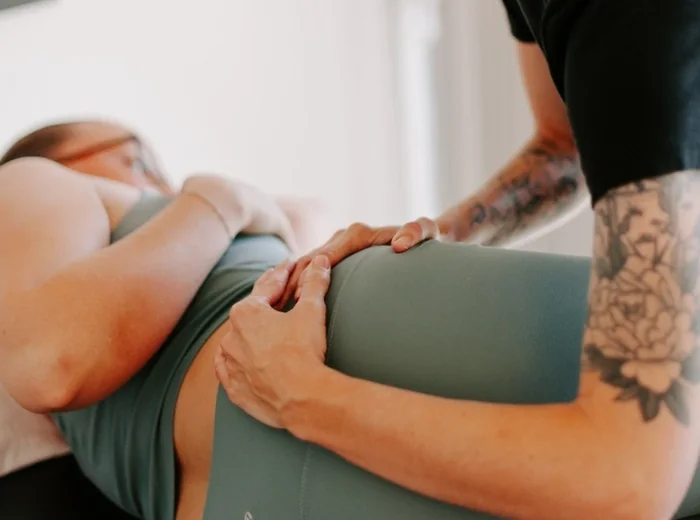
Pain that moves around tends to get treated vaguely, and vague treatment is why it keeps moving. Your evaluation is a full hour with Dr. Sarah Hare, PT, DPT, PCES, spent measuring what your joints actually do: where the motion has gone, which muscles are firing late, and which nearby joint is stiff enough to be handing off its share of the work. The order matters here. Mechanics come first, with hands-on joint mobilization and soft tissue work to give the joint back the range it lost, because loading a joint that cannot move is how flares happen. Strength comes after that, at a dose the joint accepts. If your aching arrives with swelling, fever, or unusual fatigue, that belongs with your physician too, and Dr. Hare will tell you so plainly. California is a direct access state, so no referral is needed to start, and your benefits are verified in writing before your first visit.
What to expect from your recovery.
Evaluation
A full hour, hands on, with Dr. Hare. We measure range joint by joint, test strength, and watch you move until the compensations show themselves. If something in your history points toward a medical workup rather than a mechanical one, you hear that on the first day instead of after six visits.
Restore the mechanics
Graded joint mobilization and soft tissue work give the joint its range back, and range is what makes everything after this possible. Pain usually eases here, because a joint that can move stops defending itself all day. Nothing gets loaded heavily until this part is genuinely done.
Build support, in order
Then strength, at a dose the joint accepts, working outward from the joint that hurts to the ones handing it extra work. Progress gets measured out loud each visit. If a joint is not responding, the plan changes rather than repeating itself with more repetitions.
Dr. Sarah Hare is an incredible Physical Therapist. Her knowledge of the body, her clear instruction, listening skills and attention to detail is extremely rare IMO.
Aching rarely stays where it started.
Foot & Ankle Pain
Plantar fasciitis, sprains, Achilles pain. Your foot is the base of everything above it.

Hip & Knee Pain
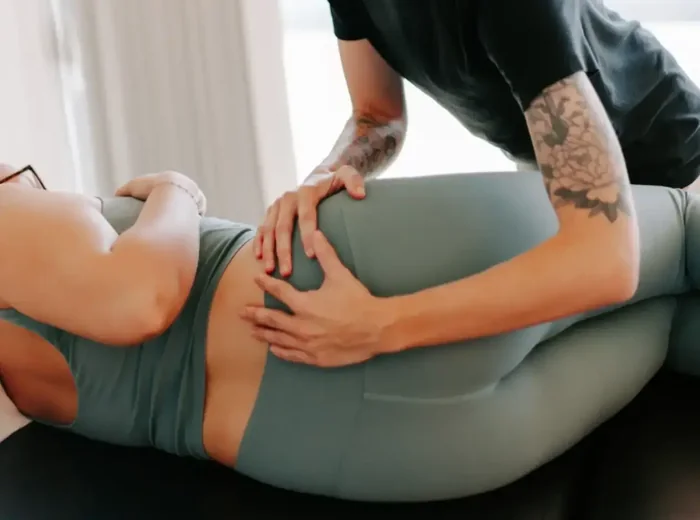
Weight-bearing joints rarely fail alone. We treat the joint and the mechanics feeding it.

Shoulder Pain
Rotator cuff, frozen shoulder, overhead pain. Mobility first, then strength that actually holds.