Abdominal Pain Treatment in Palm Desert
The incision healed years ago and the area still pulls, burns, or feels numb and tight. Your core will not switch on. You were told it looks fine, so nothing was done. Restricted tissue is treatable at any point after surgery.
What causes abdominal pain?
Skin closes long before the layers underneath finish reorganizing. Fascia, muscle, and the organs behind them are meant to glide against each other every time you breathe, twist, or stand up, and surgery, infection, or months of guarding can knit that movement down. When tissue that should slide pulls instead, you get pain, a band of tightness, numbness that never resolves, and a core that refuses to engage. All of it is mechanical, which means all of it can be assessed by hand and worked on directly.

A surgical scar is more than the line you can see. Underneath it, layers that used to move separately can bind to each other and to the fascia below, and the result is a shelf that pulls when you reach overhead, stand up straight, or roll over in bed. Numbness above the scar and a band of pressure below it are both common. Scar mobilization works whether the surgery was recent or decades ago.
Your bladder, bowel, and uterus sit in fascia and are supposed to move with your diaphragm on every breath. Adhesions from surgery, endometriosis, infection, or long-standing constipation restrict that motion, and restricted organ mobility shows up as a deep ache you cannot point to, bloating that builds through the day, and pain that depends on position rather than effort. Visceral mobility technique addresses this layer specifically, and it is one of Dr. Hare's advanced trainings.
During pregnancy the connective tissue running down the middle of your abdominal wall stretches and thins to make room, and afterward it may stay lax. The width of the gap matters less than whether you can generate tension across it. Until you can, pressure pushes out through the middle instead of being managed, which produces the doming, the ache, and the feeling that your trunk has no center to work from.
After surgery or a long painful stretch, the deep abdominal muscles and the pelvic floor stop firing in time with your breath. You brace with the outer layer instead, or hold your breath entirely. The wall gets stiff without getting supportive, and your back and pelvis absorb what the core should be handling. This is a timing problem rather than a strength problem, so more crunches make it worse.
Pain teaches you to hold still. Weeks of shallow breathing and a permanently drawn-in stomach shorten the abdominal wall and the diaphragm, and the ribs stop moving with you. Constipation and straining add daily pressure from the inside. Sitting folded for hours keeps everything short. None of these started the problem, and all of them keep it going, which is why breathing, bowel habits, and positioning are part of the plan.
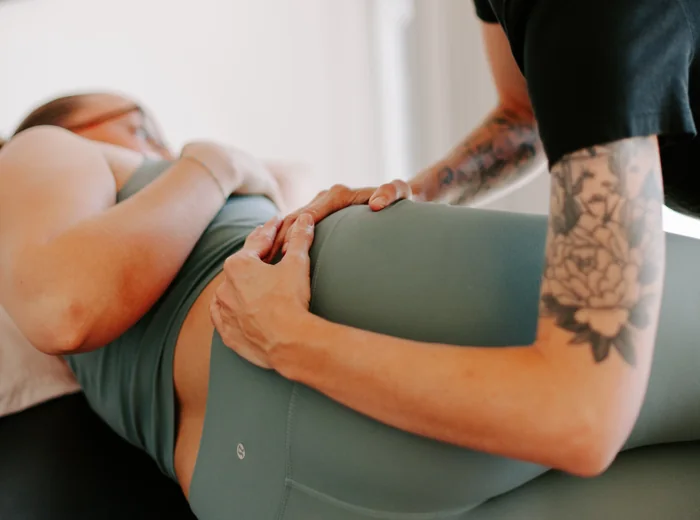
How physical therapy in Palm Desert helps.
The abdomen gets treated here the way any other restricted structure does. Find what stopped moving, restore the movement, then load it. A full hour with Dr. Sarah Hare, PT, DPT, PCES, includes hands-on assessment of your scars and the layers beneath them, how your ribs and diaphragm move, how your abdominal wall answers pressure and load, whether your midline can generate tension, and how your pelvic floor coordinates with all of it. Dr. Hare trained specifically in visceral mobility techniques, so organ mobility and fascial glide are assessed rather than assumed. Treatment from there is scar and soft tissue mobilization, visceral and diaphragm work, breathing retraining, and a progressive core program that starts with timing and finishes with real load.
This is often the work that finally connects a long list of symptoms nobody had linked: the pulling, the bloating, the back pain, the leakage, the sense that your trunk stopped being one piece. Most people notice a change in the first few visits, and whether the plan is working is clear inside two or three weeks. Two things worth answering before you book. Assessing the pelvic floor internally is sometimes the clearest way to understand how pressure is being managed, and it is always optional: it is explained first, you can say no, and much of this work is external hands-on treatment of the abdomen and ribs. And nobody comments on your body here. Scars, weight, a stomach you have avoided looking at, trans and nonbinary bodies. Routine, all of it.
What to expect from your recovery.
Evaluation, layer by layer
A full hour with Dr. Hare, in the clinic. We test scar mobility, rib and diaphragm movement, abdominal wall function, and pelvic floor coordination, then tell you which of those is producing your symptoms. If anything points to a problem that belongs with your physician, you hear it that day.
Restoring glide and mobility
Hands-on work opens the layers before we ask anything of them. Scar and fascial mobilization, visceral mobility techniques where organ movement is restricted, diaphragm and rib work, and breathing retraining so pressure has somewhere to go. Many people feel the pulling and tightness ease here, well before any strengthening starts.
Rebuilding a core that holds
Then we load it. Timing first, so the deep abdominals and pelvic floor fire with your breath, then progressive strength and real movement: lifting a child, carrying groceries, getting back to the gym or the trail. You leave managing pressure yourself, with a short routine and no fear of using your own midsection.
Sarah Hare is an incredible physical therapist. I had been struggling for months with unspecified leg and nerve pain.
Pain rarely travels alone.
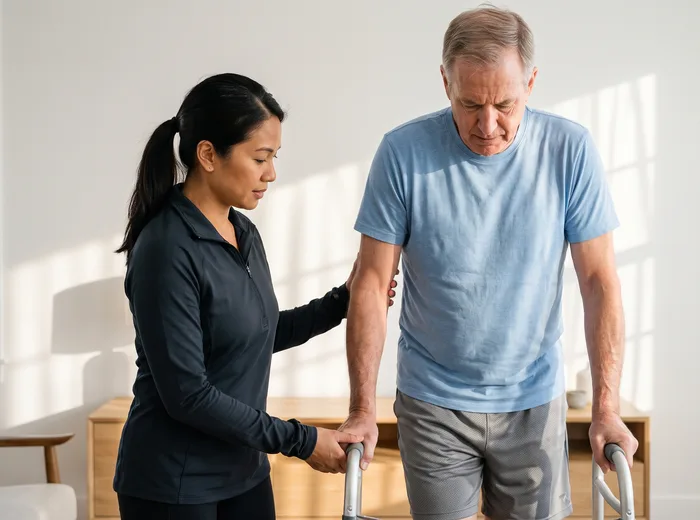
Pre & Post Surgical
Go into surgery stronger and come out with a plan. Prehab and post-op rehab under one roof.

Endometriosis
Pelvic floor tension and adhesions amplify endometriosis pain. Hands-on care addresses what medication cannot reach.
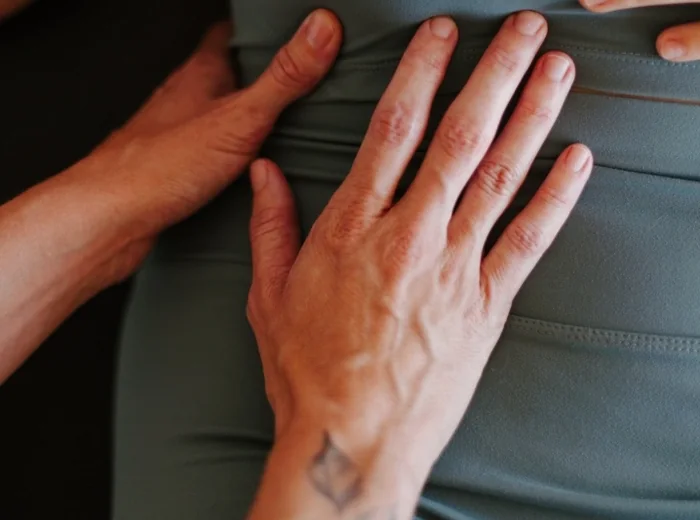
Bladder & Bowel Dysfunction
Leakage, urgency, retention, or constipation. These are muscle and coordination problems, and they are treatable.