Endometriosis Pain Treatment in Palm Desert
You have a diagnosis, or you spent years fighting to get one. Either way the pain outlasted the medication, and for many people it outlasted the surgery. Physical therapy does not treat endometriosis. It treats what the pain has done to your muscles, your fascia, and your nervous system.
What causes endometriosis pain?
Endometriosis is a disease. Tissue that behaves like uterine lining grows where it should not, and it is managed medically and surgically by your physician. Physical therapy does not remove it, shrink it, or cure it. What physical therapy addresses is the layer that builds on top of it over years, because pain that returns on a cycle changes how muscles hold, how tissue glides, and how loudly your nervous system reports everything happening in your pelvis. That layer is often a large share of what you feel day to day, and it is mechanical, so it can be treated.
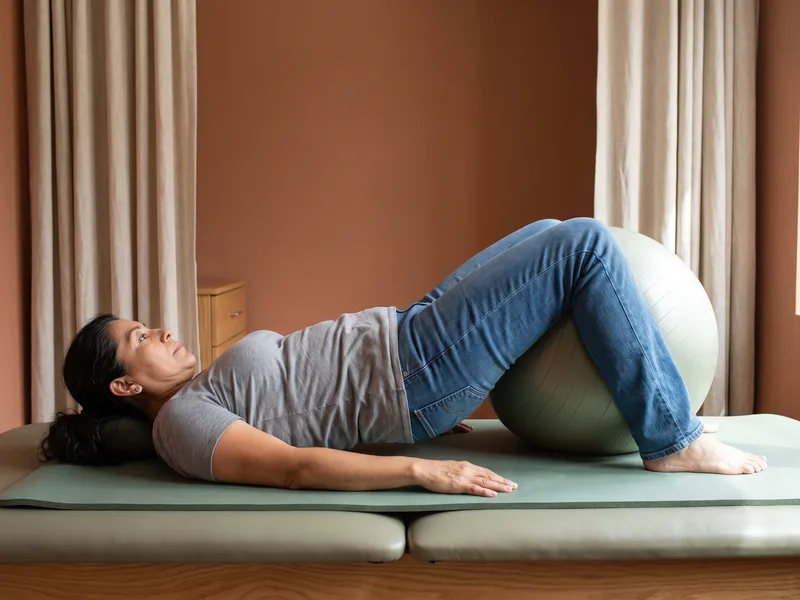
Muscles contract around pain. When the pain arrives every month for years, the pelvic floor stops fully letting go between episodes and settles into a shortened, tender resting state. That alone produces deep pelvic ache, painful penetration, burning after long sitting, and urinary urgency, and it keeps going through the weeks you are supposed to feel fine. Releasing it does nothing to the disease, but it removes a real source of pain that no medication reaches.
Lesions and the surgeries that treat them both leave adhesions, and adhesions stop structures from sliding past one another the way they should. Your bladder, bowel, uterus, and abdominal wall are built to move against each other with every breath and every step. When they cannot, movement pulls instead of glides, and the pull registers as pain. Visceral mobility work is aimed exactly at this layer, and it is one of Dr. Hare's specific advanced trainings.
Nothing in the pelvis works alone. Months of bracing against pain shorten the hip rotators and hip flexors, stiffen the low back and ribs, and leave the abdominal wall tight and unwilling to expand. Those tissues then generate pain of their own, which is why endometriosis pain so often arrives with an aching hip, a back that will not settle, and a stomach that feels rigid even on a good week.
When the nervous system processes the same pain signal for years, it gets efficient at it. The threshold drops, the map of the area blurs, and pressure or touch that should read as neutral gets reported as painful, including in places the disease never involved. This is a measurable change in the nervous system, not exaggeration and not a psychological failing, and graded movement, breathing, and manual work are how the threshold climbs back.
Surgery removes lesions. It does not undo years of guarding, and it does not prevent adhesions forming while you heal. Going in with a pelvic floor that can relax and an abdominal wall that moves gives you a better starting point. Afterward, scar and adhesion work, restored breathing, and a graded return to load are what stop the old holding pattern from quietly rebuilding itself around new scar tissue.

How physical therapy in Palm Desert helps.
Being clear about the boundary is the whole point. Dr. Sarah Hare, PT, DPT, PCES, does not treat endometriosis, and nobody here will suggest that hands-on work makes the disease go away. What a full hour of evaluation does is separate the pain you cannot change from the pain you can: how your pelvic floor rests and releases, where your abdominal wall and any scars have stopped gliding, what your hips and low back are holding, how you breathe, and where your tolerance for load actually sits today. The plan then works those findings directly, with manual therapy and visceral mobility techniques, down-training for a floor that will not release, graded strength for the hips and trunk, and breathwork, which Dr. Hare uses as a trained yoga instructor rather than as an afterthought.
Honest goals sound like this. Fewer bad days, shorter flares, sex you do not brace for, and a body you can load again without paying for it later. Most people notice something change in the first few visits and know whether the plan is working within two or three weeks. Your care runs alongside your gynecologist or excision surgeon, and if what you describe belongs with them you will be told plainly. Two questions come up before booking. An internal assessment is often the clearest way to see what your pelvic floor is doing, and it is always optional: explained first, declinable at any point, with a great deal of useful work done externally. And you will not be doubted here. Being dismissed is the most common history in the room.
What to expect from your recovery.
An evaluation that separates the layers
A full hour, in the clinic. We go through your history, your cycle, your surgeries, and what sitting and moving do to the pain, then assess your hips, abdominal wall, breathing, and, with your consent, your pelvic floor. You leave with the map: what is disease, what is muscle and tissue, and what we can change.
Releasing the guarding and the restriction
Hands-on work comes first, because sensitized tissue will not tolerate loading yet. Manual therapy and visceral mobility techniques for restricted abdominal and pelvic tissue, scar work where surgery has been, down-training and breathwork for a floor that has forgotten how to release, and movement chosen deliberately so it does not provoke a flare.
Loading again, and a plan for flares
As tolerance climbs we add real strength through the hips, trunk, and legs, and rebuild the activities you gave up. Flares still happen, because the disease is still there. The difference is that you have a plan for them beyond waiting it out, and a body that no longer loses weeks recovering from one.
Dr. Sarah Hare is an incredible Physical Therapist. Her knowledge of the body, her clear instruction, listening skills and attention to detail is extremely rare IMO.
Pain rarely travels alone.
Abdominal Pain
Scar tissue, visceral restriction, and a core that stopped firing. We work the abdomen the way we work any other joint.

Bladder & Bowel Dysfunction
Leakage, urgency, retention, or constipation. These are muscle and coordination problems, and they are treatable.

Pelvic Organ Prolapse
Heaviness, pressure, or a bulge that gets worse as the day goes on. Prolapse responds to targeted pelvic floor work.