Postpartum Recovery in Palm Desert
Diastasis recti, leakage, a cesarean scar, pain with sex, and the road back to lifting and running. There is no expiry date on any of it.
What is postpartum physical therapy in Palm Desert?
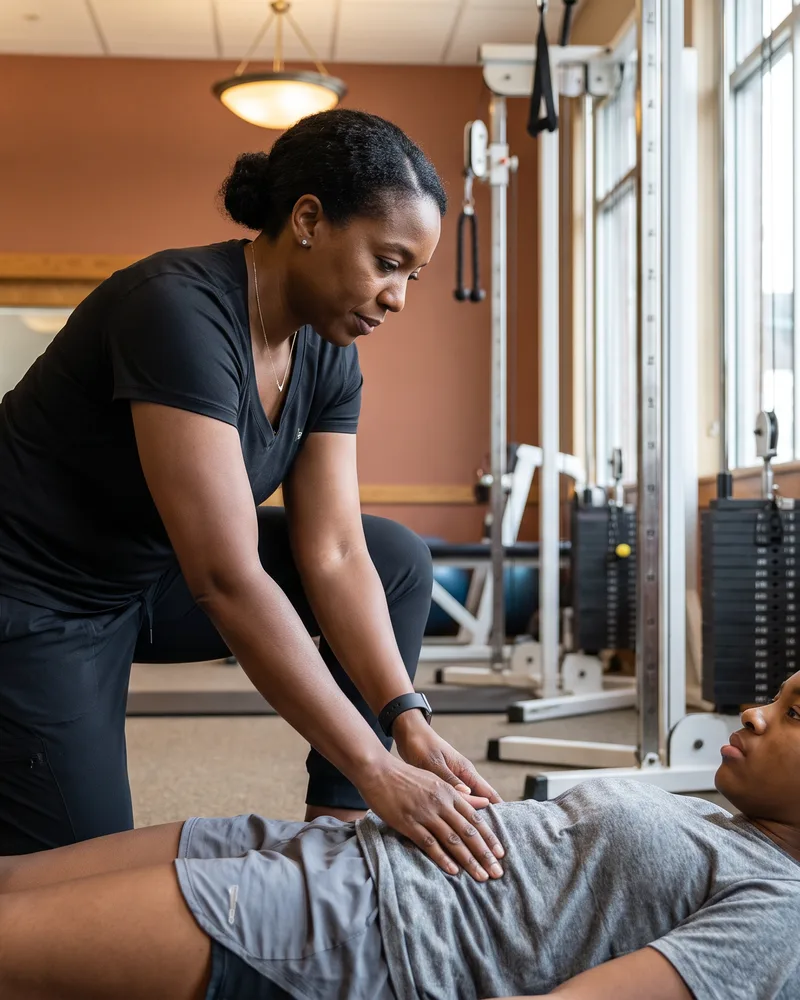
At six weeks you were cleared. Cleared for what, exactly? Cleared to drive, to have sex, to go back to work. Nobody put a hand on your abdominal wall, nobody assessed your pelvic floor, nobody watched you pick up something heavy. Cleared for daily activity is not the same as assessed, and that gap is where most postpartum problems live. Postpartum physical therapy closes it. Dr. Sarah Hare, PT, DPT, PCES, checks what a six-week appointment has no time for: whether your abdominal wall can generate tension across the midline or lets pressure push straight through it, whether your pelvic floor contracts and releases on cue, how a cesarean or perineal scar is moving, and what all of that does when you stand up holding a car seat in one hand.
The other thing nobody says: there is no expiry date on this. Muscle and connective tissue respond to skilled hands-on work and to load whether you gave birth six weeks ago or sixteen years ago. A diastasis from a first pregnancy in your twenties is still worth assessing in your forties. Leaking that started after your second child does not become permanent because you have lived with it for a decade. What accumulates over the years is compensation, and those come apart in a fairly predictable order once somebody actually looks. Visits happen in the Palm Desert clinic, and the baby is welcome.
Who it's for.
Postpartum is not a season that closes after a year. Three situations bring most people in, and they can be decades apart.
Newly postpartum, and something is off
You are weeks or months out. Your middle feels soft and unsupported, you are leaking, sitting hurts, or your scar feels numb and tethered. Early is a good time to start, and gentle does not mean useless: breath, pressure management, scar work, and the specific movements that get you through a day of feeding and carrying without your back giving out. Nothing here asks you to be ready for a workout.
Years out, and told the window closed
Your kids are in school, or grown, and you have quietly organized your life around it. No running, no trampolines, a spare pad in your bag, a bathroom check before every outing. Someone told you it was too late. It is not. Tissue is still responsive and coordination is still trainable. Long-standing symptoms often take longer to shift, because more habits are built around them, and they do still shift once an assessment finds what is driving them.
Getting back to running or lifting
You want your barbell, your trail, or your run club back, and the last attempt ended in leaking, heaviness, or a line coning down the middle of your stomach. That is information, not a verdict. Returning to load is a progression: pressure control first, then strength through full range, then impact added in doses your pelvic floor and abdominal wall can handle. It is a plan with checkpoints, not a restriction.
What to expect in a session.
Every visit is a full hour with Dr. Hare, and the first one is the assessment nobody gave you at six weeks.
The assessment you did not get
You talk through the birth, the recovery so far, and what you want back. Then the physical part: the abdominal wall and midline under real tension, breathing and rib mobility, hips and low back, what your posture does with a baby on one side, how you move from lying to standing. A pelvic floor assessment is offered, explained before it happens, and always optional, with effective external work available if you decline.
Hands-on work and retraining
Cesarean and perineal scars get mobilized so they glide instead of tugging on everything around them, which often changes both numbness and pain with sex. Visceral mobility techniques are used where abdominal tissue has become restricted. Then the retraining: teaching your deep abdominals and pelvic floor to work with your breath instead of bracing all at once. This is what makes a diastasis functional rather than simply measured.
Loading, up to whatever you want back
Strength comes next, and it is real strength. Carries, squats, hinges, single leg work, then impact if running is on your list, progressed at the pace your symptoms allow. You leave with a short home program and clear rules for what to do if something flares. Your progress is remeasured out loud, so you can tell whether the plan is working inside the first few weeks.
Bring the baby. Feeding, holding and settling during a visit is normal here and nothing has to stop for it. And if you are still pregnant, this plan can be written before the birth, which is far easier than making decisions in week two.
I've been working with Inclusive Pelvis Wellness from my third trimester through postpartum and I don't know what I'd do without Sarah as part of my care team.
Where to go next.
Pelvic Floor Therapy
Internal and external pelvic floor work for leakage, prolapse, pain, and the symptoms nobody warned you about.
Birth Preparation
Train for labor the way you would train for anything else. Breath, positions, and a pelvic floor that knows how to let go.

Abdominal Pain
Scar tissue, visceral restriction, and a core that stopped firing. We work the abdomen the way we work any other joint.