Manual Therapy in Palm Desert
Skilled hands-on work with Dr. Sarah Hare, PT, DPT, PCES: joint mobilization, soft tissue work, scar tissue mobilization, visceral mobility technique. Then loading, because that is what makes the change hold.
What does manual therapy in Palm Desert involve?
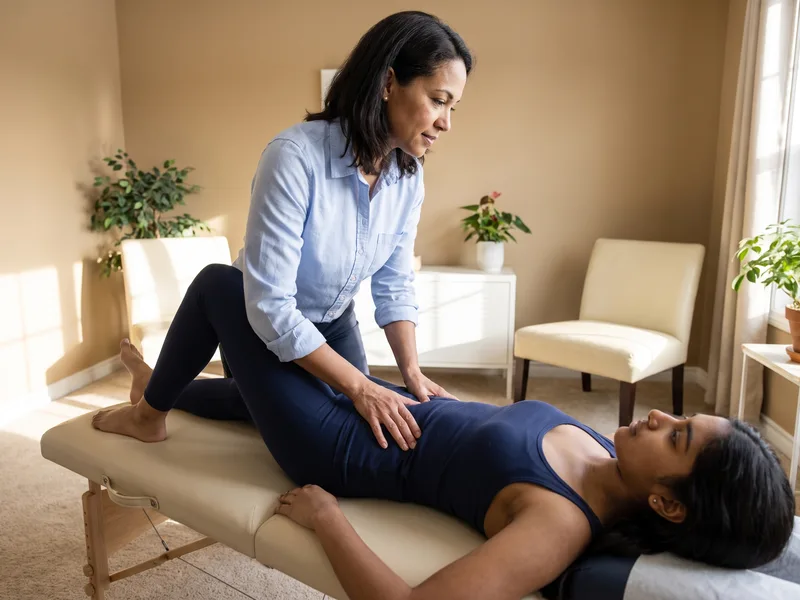
Hands on is a phrase clinics use loosely, so here is what it means in this practice. Dr. Hare mobilizes joints that have lost their glide, meaning the small accessory motion a hip or a shoulder needs before it can travel through full range. They work through soft tissue and myofascial restriction, the guarded, thickened areas that hold a muscle short no matter how faithfully you stretch it. They mobilize scar tissue after surgery so that skin, fascia and the muscle underneath stop moving as one stiff block. And because Dr. Hare has advanced training in visceral mobility technique, they can also assess the mobility of your organs and the connective tissue that anchors them to your abdominal wall and pelvis, which matters after a C-section, a hysterectomy or other abdominal surgery. All of it happens in a full hour with the Doctor of Physical Therapy who evaluated you, with no aide finishing the session.
The mechanism is worth stating plainly. Hands-on work does not permanently lengthen tissue and it does not put anything back in place. What it does is open a window: for a stretch of time after treatment, the joint travels further, the muscle stops guarding, and the area quiets down enough that you can finally load it properly. Loading is what keeps the change. So manual therapy is never the whole plan here. It is the part of the hour that buys you room, and the exercise that follows is what turns that room into strength you keep. You will be told which is which, and you will learn the difference between a session that bought you a good afternoon and a plan that is changing what your body tolerates. California is a direct access state, so you can book the evaluation without waiting on a physician referral.
Who it's for.
Hands-on work belongs in the plan when something is mechanically restricted, not simply sore. These are the three situations where it earns its place most often.
A joint that has lost its glide
Your shoulder stops short of overhead. Your hip catches at the bottom of a squat. Your knee hits a wall well before the end of its range. That is often accessory motion inside the joint, the small glide that has to happen before the big movement can, rather than a muscle asking for another stretch. Dr. Hare mobilizes the joint in the direction it has stopped moving, then puts you straight into using that range so your nervous system holds onto it.
Tissue that never answers a stretch
You have stretched the same calf, hamstring or upper back for months and it feels identical every single time. Tissue that is guarded rather than genuinely short does not respond to stretching, because the tension is protective. Skilled hands at the right depth and pace give that guarding a reason to let go, and breath helps, which is why Dr. Hare, a certified yoga instructor, brings breathwork into the room. Then you load the area while it is quiet.
After surgery, when nothing slides
After a C-section, a hysterectomy, other abdominal surgery, or a hip or knee replacement, tissue heals but not always in layers that slide over each other. A scar can tether skin to fascia to muscle until your core will not switch on and bending forward feels foreign. Deeper in, the organs and their attachments can lose mobility too. Scar tissue mobilization and visceral mobility technique address both, gradually. There is no window that closes here: an old scar still responds.
What to expect in a session.
A full hour, one on one with Dr. Hare, in the Palm Desert clinic. Nothing is done to you without being explained first.
Finding the actual restriction
The visit opens with a doctor-level evaluation, not a table and a heat pack. Dr. Hare watches how you move, then puts hands on the joint and the surrounding tissue to work out which restriction is producing your symptom. You hear what they find in plain words, including the common case where the stiff spot is not the painful spot, and you agree on what gets treated before it is treated.
Graded hands-on work
Treatment is matched to what your tissue will accept that day. Joint mobilization is a firm, specific pressure rather than a thrust. Soft tissue work reads as deep but tolerable, and if it stops being tolerable you say so and it changes. Anything near a scar is explained and consented to first, and you can stop at any point. Then the movement that hurt gets rechecked.
Loading it in the same visit
Then you use the range you just got back. The exercise chosen immediately after hands-on work is the reason the gain outlasts the drive home, so it happens in the room while the window is open. You leave with a short list of specific things to work on rather than a thick printed packet, and the same movement is measured out loud at every visit so you can see whether the plan is working.
Wear clothing you can move in and that lets Dr. Hare reach the area being treated. Mild soreness for a day after hands-on work is common and should settle. Sharp pain that lingers is not expected, so call and say so. Most people notice something change in the first few visits, and whether the plan is working is usually clear within two to three weeks. If it is not moving, the plan changes rather than repeats. Your benefits are verified before that first visit and given to you in writing, with a self-pay rate if your plan is a poor fit.
Sara was incredibly helpful to me when I suffered a twist in my back in combination with a stick pelvic.
Where to go next.

Cupping
Decompression instead of compression. Cupping lifts restricted tissue so the area underneath can move again.
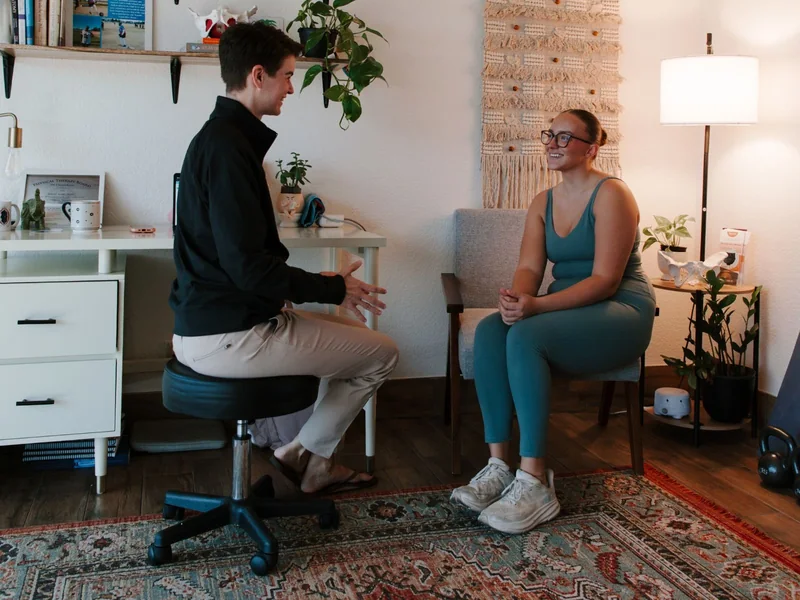
Joint Mobilization
Graded hands-on joint work that restores the glide a stiff joint has lost.

Back Pain & Sciatica
The most common reason people call us. We find the driver, whether it is the disc, the hip, or the pelvic floor.