Joint Mobilization in Palm Desert
You have been stretching for months and the joint still stops in the same place. Stretching lengthens muscle. When the joint itself has lost its glide, the joint is what has to be moved.
What is joint mobilization in Palm Desert?
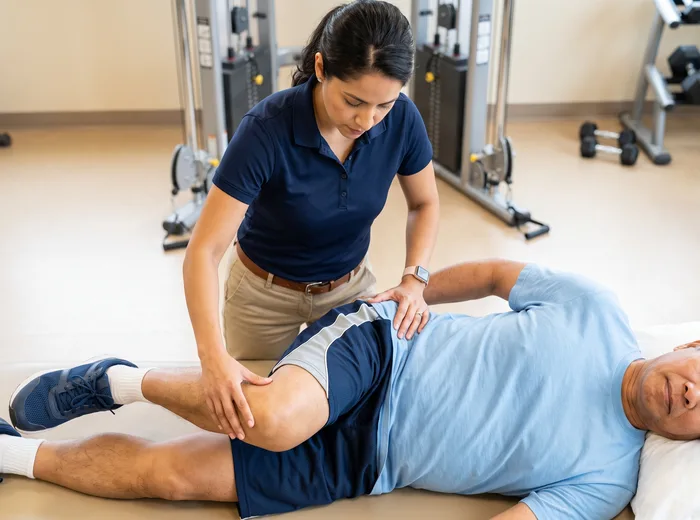
A healthy joint does two things at once: it bends, and while it bends the surfaces inside it slide and spin against each other. That second part is the glide, and it is the part stretching cannot reach, because stretching pulls on muscle along the length of a limb while the restriction sits inside the joint itself. Joint mobilization is hands-on work that addresses the glide directly. Dr. Sarah Hare, PT, DPT, PCES, holds the joint and moves one surface against the other, in the exact direction it has stopped moving. A glide, not a pull.
Each direction is tested by hand first, then the force is graded to what the joint tolerates that day: gentle oscillation when pain is the limiting factor, firmer work at the end of the available range when it is not. You will hear which direction is being treated and why, because the assessment happens out loud. Mobilization opens a window, and it does not hold that window open on its own, so every session that includes joint work also includes loading afterward: strength through the range that was just restored, plus a short home plan that uses it daily. Hands first, then load, in that order, inside the same full hour.
Who it's for.
A joint stops gliding for a handful of specific reasons. These are the ones that actually walk through the door.
Weeks in a cast, a brace, or a sling
A joint that has been splinted, braced, taped, or simply guarded for a few weeks loses motion in a specific direction rather than all directions at once. The capsule shortens where it was held, and the fluid that keeps the surfaces slippery circulates less. The bone heals and the stiffness stays behind after everyone has stopped worrying about you. That stiffness is mechanical, and mechanical restrictions respond to hands.
A joint capsule that tightened and never let go
Every joint sits inside a sleeve of connective tissue. After an injury, or a long stretch of swelling and inflammation, that sleeve can thicken and lose its slack unevenly. You feel it as a hard stop rather than a pull: the motion does not gradually resist, it just ends, and pushing harder only hurts. Frozen shoulders behave this way, and so do stiff hips, ankles, and mid-back segments.
Scar tissue and adhesions after surgery
Tissue that heals under tension lays down in a disorganized way and adheres to whatever sits next to it, which limits the slide between layers and blocks the last part of the range. Around the abdomen and pelvis it does the same thing to fascia and organs, which is why this work is not only for knees and shoulders. Dr. Hare trained in orthopedic manual therapy and in visceral mobility techniques for that reason.
What to expect from hands-on joint work.
Testing the joint, one direction at a time
Your first visit is a full hour with Dr. Hare. We measure what the joint does on its own, then take it through each accessory glide by hand to find the direction that has stopped. We test the joints above and below it as well, because a stiff ankle often presents as a sore knee. You leave knowing the specific restriction and the plan for it.
Graded mobilization, then immediate loading
Treatment pairs hands-on joint work with movement in the range it has just opened. The grade of force is matched to what the joint tolerates that day and it changes as the joint changes. Loading follows inside the same hour, because strength through the new range is what stops the joint from closing again overnight.
Strength that holds the range without hands
Once motion holds between visits, the hands-on portion shrinks and the strengthening grows. You get a short home plan that uses the range every day. Discharge happens when the joint keeps what it gained without treatment, and you know exactly what to do if it starts to tighten again.
Dr. Sarah Hare is an attuned and super knowledgeable physical therapist.
Where to go next.

Manual Therapy
Hands-on work on joints, soft tissue and scar restriction, paired with loading that holds.
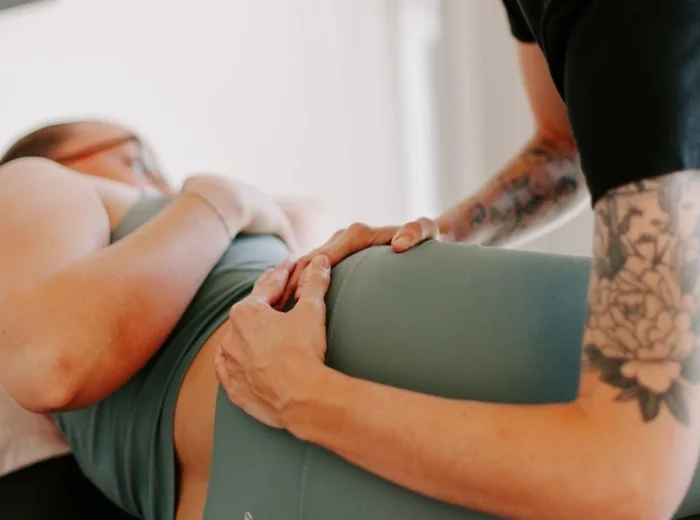
Joint Pain
Widespread aching and stiffness that moves around. We restore the mechanics before we load the strength.
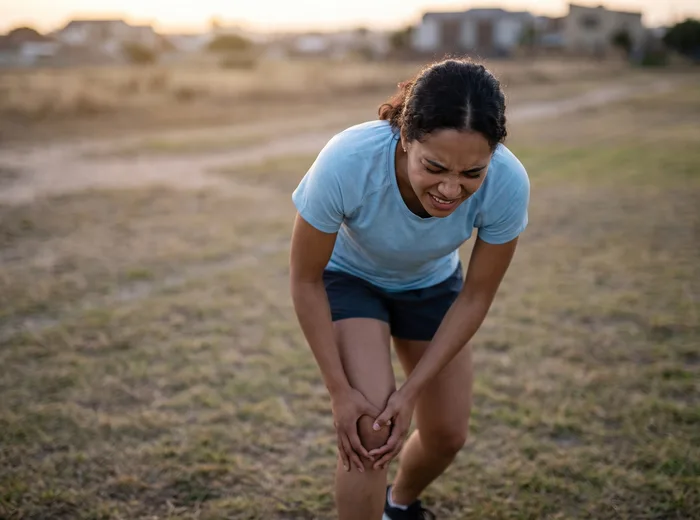
Hip & Knee Pain
Weight-bearing joints rarely fail alone. We treat the joint and the mechanics feeding it.